Die Casting Quotation Checklist for OEM Buyers
A practical die casting quotation checklist for OEM buyers: the files, specs, volumes, tooling details, tolerances, finishes, and testing needed.

Technical Director, Die Casting Engineering
Blog Visual Plan
Article visuals for die casting quotation checklist
These visuals use your current KastMfg image library now, and they will automatically switch to article-specific images when you add them later.
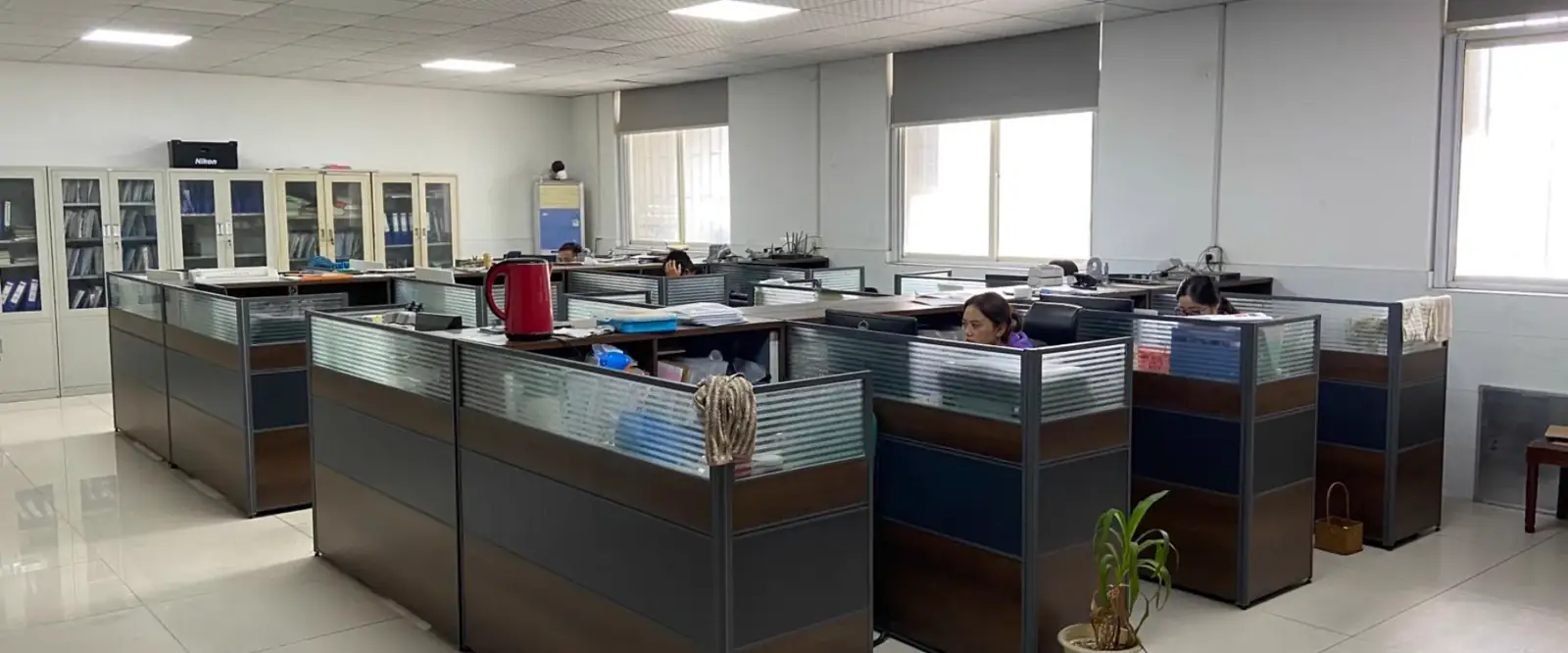
Lead Technical Image
Add a hero-level manufacturing, tooling, or component image that reinforces the article topic above the body copy.
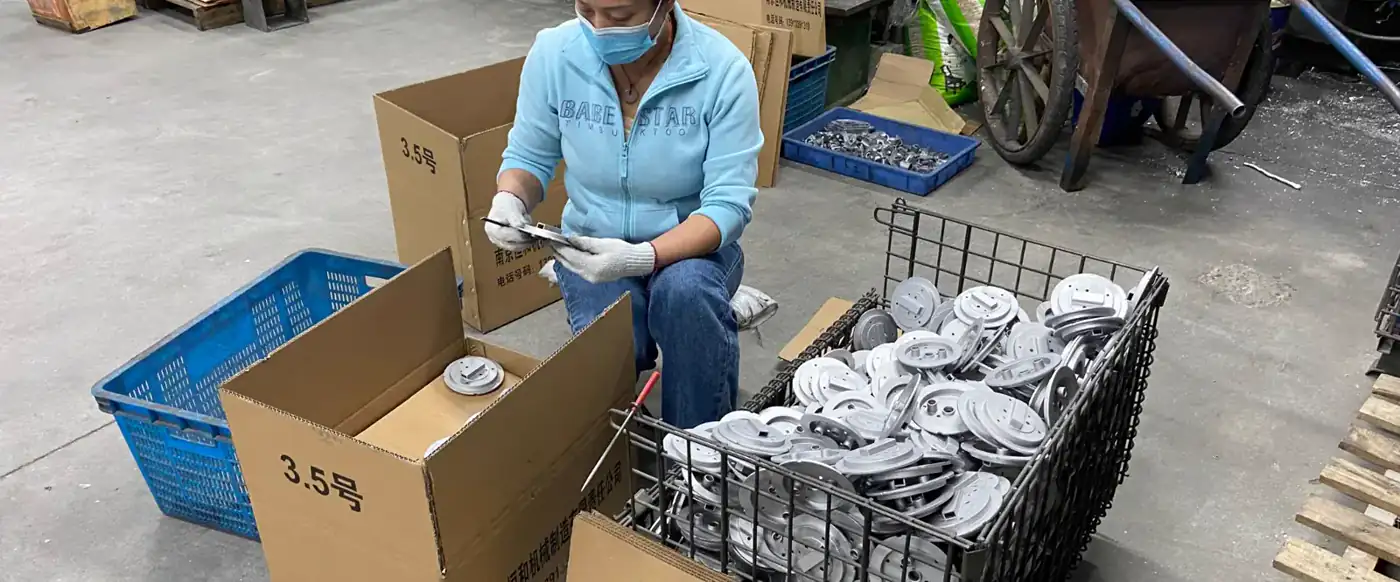
Comparison or Detail Image
Reserve a second image for an alloy comparison, defect example, tooling detail, or application close-up deeper in the article.
A good die casting quotation is built from complete engineering information. If the drawing package is missing material, annual volume, tolerance, finishing, or inspection requirements, the quote will either be delayed or based on assumptions that may not survive production review.
This checklist helps OEM buyers prepare a clear, comparable RFQ package before contacting a die casting supplier. Use it when sourcing aluminum, zinc, or magnesium die cast parts for automotive, EV, electronics, industrial machinery, lighting, pumps, valves, or hardware programs.
Quick Answer: What Do You Need for a Die Casting Quote?
To request an accurate die casting quote, prepare a 3D model, 2D drawing, alloy requirement, annual volume, expected order quantity, tolerance requirements, surface finishing needs, CNC machining scope, inspection requirements, packaging standard, and target launch schedule. If the alloy or process is not fixed, provide the application conditions so the supplier can recommend a practical option.
For a faster response, send your files through the KastMfg RFQ page or email the drawing package directly to casting@kastdiecast.com.
Die Casting Quotation Checklist
| RFQ Item | What to Provide | Why It Matters |
|---|---|---|
| 3D model | STEP, STP, IGS, X_T, or native CAD file | Enables DFM review, tooling layout, parting line review, and machining planning |
| 2D drawing | PDF or DWG with dimensions, tolerances, notes, and revision | Defines critical dimensions, inspection standards, and acceptance criteria |
| Alloy requirement | A380, ADC12, A360, A413, Zamak 3, Zamak 5, AZ91D, AM60B, or "supplier to recommend" | Affects casting temperature, tool life, strength, corrosion resistance, and unit cost |
| Annual volume | Pieces per year and estimated program life | Drives cavity count, tooling steel choice, automation level, and price breaks |
| Sample quantity | Prototype, first article, and pilot-run quantities | Helps plan soft tooling, production tooling, or bridge production |
| Finished part scope | Casting only, machined part, coated part, or assembled component | Prevents quote gaps between casting cost and final delivered component cost |
| Tolerances | General tolerance plus critical tolerance callouts | Determines casting-only feasibility and CNC machining requirements |
| Surface finish | Shot blasting, powder coating, anodizing, plating, painting, polishing, or passivation | Changes process routing, masking requirements, inspection, and packaging |
| Testing | Leak test, pressure test, X-ray, CMM, salt spray, tensile test, or PPAP | Adds equipment time, documentation, and quality control steps |
| Packaging | Bulk pack, tray pack, export carton, pallet, VCI bag, or customer label | Protects finished surfaces and supports import, warehouse, or assembly needs |
| Timeline | Tooling approval date, sample date, PPAP date, and production launch | Confirms whether the project schedule is realistic |
| Incoterms | EXW, FOB, CIF, DAP, or DDP | Makes landed cost comparison clearer |
1. Send Both 3D and 2D Files
A 3D model shows geometry. A 2D drawing defines engineering intent.
For die casting, the 3D model helps the supplier review parting direction, sliders, shutoffs, draft, rib layout, wall thickness, gate position, ejector position, and machining allowance. The 2D drawing defines tolerances, datum structure, surface finish notes, threads, sealing areas, and inspection requirements.
Best file package:
- STEP or STP 3D model
- 2D PDF drawing
- Native CAD file if available
- Current revision number
- Assembly drawing if the die casting interfaces with other components
If you only send a 3D model, the supplier may quote using standard casting tolerances. If the real part needs tight bore, flatness, sealing, or datum control, the quote will change after drawing review.
For design preparation, see the die casting DFM guide and the die casting tolerances guide.
2. Specify the Alloy or the Application Conditions
If the alloy is already selected, state the exact grade and standard. For aluminum die casting, common choices include A380, ADC12, A360, and A413. For zinc, common choices include Zamak 3, Zamak 5, and ZA-8. For magnesium, AZ91D and AM60B are common structural options.
If the alloy is not fixed, provide the service conditions:
- Load or strength requirement
- Operating temperature
- Corrosion exposure
- Pressure-tight or leak-tight requirement
- Conductivity or thermal requirement
- Weight reduction target
- Surface finishing requirement
- Regulatory or customer standard
This lets the supplier recommend a practical alloy instead of guessing.
Useful reference pages:
3. Provide Real Volume Information
Die casting price depends heavily on volume. The same part can require a different tooling strategy at 500 pieces per year, 10,000 pieces per year, or 300,000 pieces per year.
Include these numbers:
- Prototype quantity
- First article quantity
- First production order quantity
- Annual production volume
- Expected program life
- Forecast ramp by quarter or year
Volume affects cavity count, tool steel, tool life target, automation, trimming method, machining fixture design, inspection sampling, and packaging. It also determines whether the supplier should quote prototype tooling, production tooling, or a staged tooling plan.
For more detail, see die casting MOQ and tool life and low volume die casting.
4. Separate Casting Requirements from Finished Part Requirements
Many quote problems happen because the buyer asks for a "die casting quote" but actually needs a finished component.
Clarify whether you need:
- Raw casting only
- Trimmed and deburred casting
- CNC machined casting
- Surface finished casting
- Leak-tested or pressure-tested casting
- Casting with inserts, bearings, seals, or hardware installed
- Export-packaged finished component
This matters because the casting may be only one part of the final cost. CNC machining, surface finishing, leak testing, impregnation, assembly, and special packaging can add more cost than the casting operation itself.
For related service pages, review CNC machining for die castings and die casting surface finishing.
5. Mark Critical Tolerances Clearly
Not every dimension should have the same tolerance. Over-tolerancing a die cast part increases cost, tool complexity, inspection burden, machining time, and scrap risk.
Group dimensions into three levels:
| Tolerance Type | Example | Recommended Treatment |
|---|---|---|
| Functional critical | Sealing bore, bearing fit, thread location, datum face | Use specific tolerance and confirm machining if needed |
| Assembly important | Mounting holes, boss location, connector position | Use realistic casting tolerance or local machining |
| Non-critical | External ribs, cosmetic surfaces, non-mating walls | Use general casting tolerance |
If a dimension is critical, mark why it matters. For example: "sealing face", "bearing seat", "datum for assembly", "thread alignment", or "flatness for gasket".
This helps the supplier return a quote that matches function, not just geometry.
6. Define Surface Finish and Cosmetic Expectations
Surface finishing changes both price and process risk. A part that only needs shot blasting is very different from a part that needs powder coating, anodizing, polishing, plating, or a visible Class A cosmetic surface.
Include:
- Required finish process
- Color and texture
- Surface roughness target if applicable
- Masking areas
- Threads, bores, and sealing surfaces that must remain uncoated
- Salt spray or corrosion requirement
- Cosmetic acceptance standard
For aluminum parts, also confirm whether the selected alloy is compatible with the desired finish. Not every die casting alloy anodizes or plates equally well.
See the die casting surface finishing guide for process comparison.
7. State Testing and Documentation Requirements
Quality requirements should be quoted at the beginning, not added after tooling starts.
Common requirements include:
- CMM first article inspection
- Material certificate
- Spectrometer alloy report
- X-ray or CT inspection
- Pressure decay leak test
- Helium leak test
- Salt spray test
- Tensile test
- PPAP Level 3
- Control plan
- Process flow diagram
- FMEA
For automotive and EV programs, state whether PPAP is required and which level applies. If your customer has a specific inspection format, include it with the RFQ.
Useful references:
- Quality control
- PPAP for die casting buyers
- PPAP and FAI documentation
- Porosity testing for die castings
8. Include Packaging, Labeling, and Shipping Needs
Packaging is often ignored during early quoting, but it can affect both cost and quality. Finished die cast parts may need protection from coating scratches, machined surface damage, thread damage, corrosion, or handling impact during ocean freight.
Include:
- Bulk packaging or individual protection
- Carton weight limit
- Pallet size
- VCI bag or anti-rust requirement
- Divider tray or foam insert
- Customer part label
- Barcode or QR code
- Country-of-origin marking
- Export documentation requirements
For export programs, also state preferred incoterms and destination country. This helps the supplier estimate logistics and documentation correctly.
See packaging and export logistics for typical export handling.
9. Ask for the Right Quotation Breakdown
A useful die casting quotation should not be a single number. Ask the supplier to break out the quote so you can compare technical scope across suppliers.
Request these line items:
- Tooling cost
- Tooling lead time
- Sample cost
- First article lead time
- Unit price at 3 volume breaks
- CNC machining cost if separate
- Surface finishing cost if separate
- Testing and documentation cost
- Packaging cost
- Estimated production lead time
- Incoterm and shipping assumptions
This structure makes supplier comparison much cleaner. It also reveals whether one supplier included machining, testing, or coating while another quoted only raw casting.
10. Common Quotation Mistakes to Avoid
Mistake 1: Sending only a photo or sketch. A photo can start a conversation, but it cannot support an accurate die casting quotation.
Mistake 2: Asking for the lowest unit price before defining volume. Unit cost depends on tooling strategy, cavity count, annual volume, and finished part scope.
Mistake 3: Ignoring DFM feedback. DFM comments often identify changes that reduce tooling cost, improve fill, reduce porosity, or avoid secondary machining.
Mistake 4: Comparing quotes with different scopes. One supplier may include trimming, machining, coating, testing, and packaging. Another may quote raw castings only.
Mistake 5: Adding PPAP or leak testing after price approval. These requirements affect cost and planning. Include them in the first RFQ.
Downloadable-Style Checklist for Your RFQ Email
Use this checklist before sending your project to a die casting supplier.
Die Casting Quotation Checklist

Project:
- Part name:
- Part number:
- Drawing revision:
- Application:
- Target market:

Files:
- 3D model attached: yes / no
- 2D drawing attached: yes / no
- Assembly drawing attached: yes / no

Material:
- Alloy specified:
- Supplier recommendation needed: yes / no
- Service conditions:

Volume:
- Prototype quantity:
- First article quantity:
- Annual volume:
- Program life:

Scope:
- Raw casting only:
- CNC machining:
- Surface finishing:
- Leak or pressure testing:
- Assembly:
- Packaging:

Quality:
- General tolerance:
- Critical dimensions:
- CMM report:
- PPAP:
- Material certificate:
- Special inspection:

Commercial:
- Target sample date:
- Production launch date:
- Incoterms:
- Destination country:
- Target price if available:
FAQ
Can I get a die casting quote without a 3D model?
Yes, but the quote will be less accurate. A 2D drawing with complete dimensions can be used for early review, but a 3D model is strongly recommended before tooling quotation because die design, parting line, slider layout, and machining allowance depend on real geometry.
What file format is best for a die casting quotation?
STEP or STP is the best general 3D format for die casting quotation. A 2D PDF drawing should also be included because it defines tolerances, threads, surface finish notes, inspection points, and revision control.
How fast can KastMfg return a die casting quote?
KastMfg targets a 48-business-hour response for complete RFQ packages. Complex parts, missing drawings, unclear tolerances, or special testing requirements may require additional engineering questions before a firm quotation can be issued.
Should I specify the alloy or let the supplier recommend it?
If the alloy is already approved by your engineering team, specify it clearly. If not, provide the application conditions, strength needs, corrosion exposure, pressure requirements, finish requirements, and target cost so the supplier can recommend an alloy with a clear reason.
Why do die casting quotes from different suppliers vary so much?
Quotes often vary because suppliers include different scopes. One quote may include only raw casting, while another includes tooling, trimming, CNC machining, surface finishing, leak testing, packaging, and export handling. Always compare line items, not only the final unit price.
Send Your Die Casting RFQ to KastMfg
KastMfg reviews drawings for manufacturability, tooling approach, alloy fit, machining needs, finishing risk, inspection scope, and export packaging before returning a quotation.
Send your RFQ through the request a quote page or email your files to casting@kastdiecast.com.
KastMfg Manufacturing Co., Ltd. Email: casting@kastdiecast.com | Phone: +86 138 1403 4409 No.6, Rungu Road, Nanjing, China
Related
About The Author
Mike Yao on die casting quotation checklist
Technical Director, Die Casting Engineering
Technical Director at KastMfg with 20+ years in high-pressure die casting, leading engineering and program management across aluminum, zinc, and magnesium programs for automotive, EV, electronics, and medical OEMs worldwide.
View author profileRelated Reading
Keep exploring the blog
Die Casting vs Permanent Mold Casting: Which to Choose?
Die casting and permanent mold casting are both metal mold processes - both use reusable steel or iron dies rather than expendable sand. The difference is how the metal gets in:...
Mike Yao
7 min read
How to Choose a Die Casting Supplier - 8 Criteria
Evaluate die casting suppliers on eight criteria: process capability match, quality certifications, tooling capability and ownership policy, inspection and measurement capabilit...
Mike Yao
5 min read
China Die Casting Supplier Audit Checklist
Auditing a Chinese die casting supplier should confirm whether the factory can consistently deliver finished parts, not only whether it owns die casting machines. A good audit c...
Mike Yao
3 min read
Die Casting Tooling Steel: H13 vs P20 Compared
H13 and P20 are both tool steels, but they are not equal choices for die casting. H13 is the standard for production die casting cavities because it handles thermal fatigue, hea...
Mike Yao
6 min read