How to Choose a Die Casting Supplier - 8 Criteria
How to choose a die casting supplier for automotive and OEM programs: eight criteria covering certifications, tooling, inspection, and lead time.

Technical Director, Die Casting Engineering
Blog Visual Plan
Article visuals for how to choose a die casting supplier
These visuals use your current KastMfg image library now, and they will automatically switch to article-specific images when you add them later.
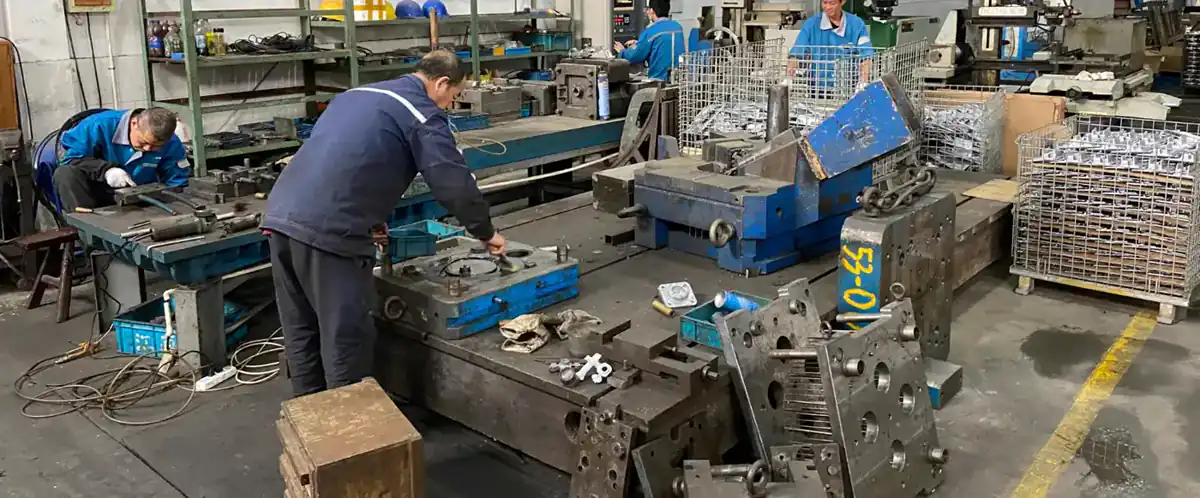
Lead Technical Image
Add a hero-level manufacturing, tooling, or component image that reinforces the article topic above the body copy.
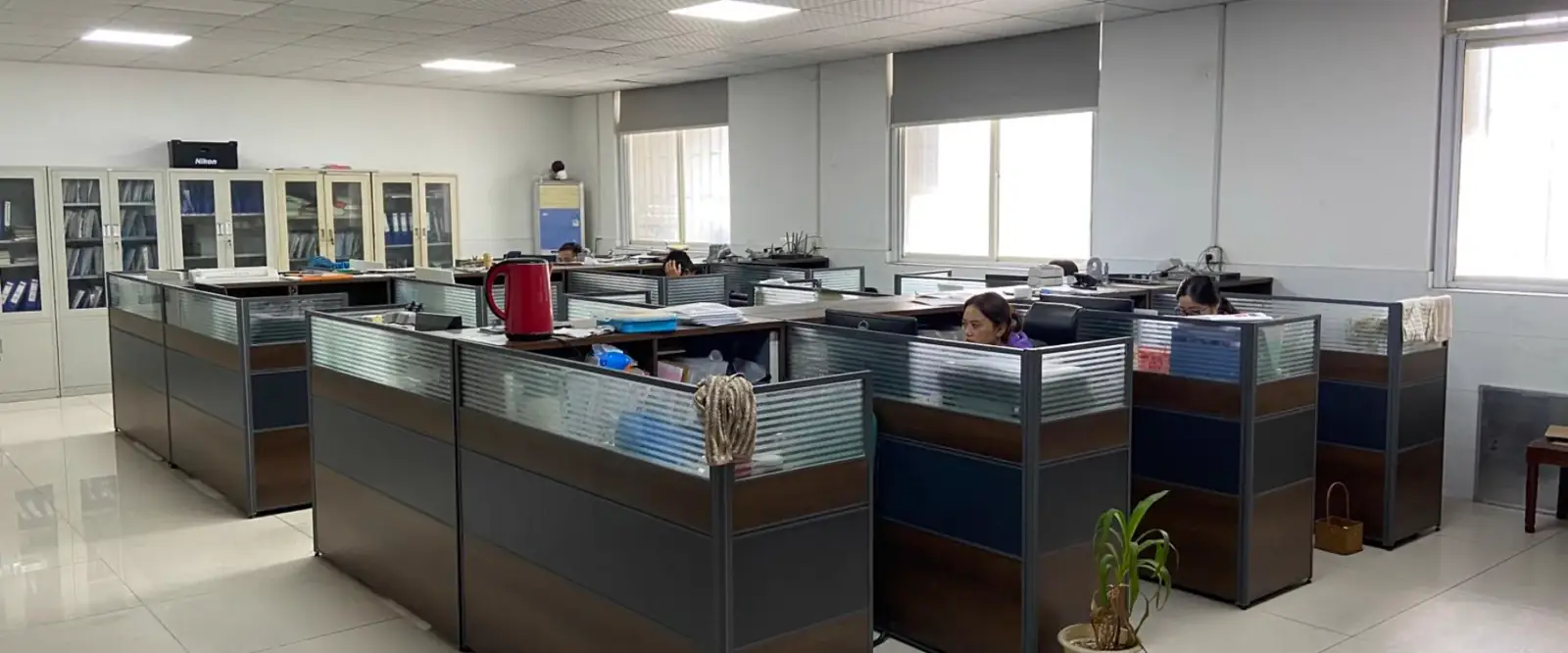
Comparison or Detail Image
Reserve a second image for an alloy comparison, defect example, tooling detail, or application close-up deeper in the article.
Evaluate die casting suppliers on eight criteria: process capability match, quality certifications, tooling capability and ownership policy, inspection and measurement capability, lead time realism, communication quality, financial stability, and customer references. This framework applies whether you are sourcing domestically or from China.
Selecting the wrong supplier is expensive — tooling costs $5,000-80,000 and cannot be easily transferred — but a systematic evaluation prevents costly mistakes. This guide provides a practical checklist for engineers, procurement managers, and quality teams.
1. Process Capability Match
Before anything else, verify the supplier can physically make your part:
- Machine tonnage range — does their largest machine provide sufficient clamping force for your projected area? Rule of thumb: clamping force (tonnes) >=projected area (cm2) x injection pressure factor (3-5 for aluminum)
- Alloy capability — do they process your specified alloy? Not all facilities run magnesium or high-pressure zinc
- Part size and weight — maximum shot weight and die opening stroke must accommodate your part
- Secondary operations — if you need CNC machining, specific surface finishes, or assembly, can they do it in-house or will they subcontract?
Red flag: A supplier who says "we can do anything" without verifying your specific part requirements.
2. Quality Certifications
Certifications are a baseline, not a guarantee — but their absence is disqualifying for serious programs.
| Certification | What It Means | Required For |
|---|---|---|
| ISO 9001:2015 | Documented quality management system | All industrial programs |
| IATF 16949:2016 | Automotive-specific QMS | Automotive Tier 1/2 supply |
| ISO 14001 | Environmental management | EU customers, ESG commitments |
| REACH / RoHS | Material compliance | Electronics, EU market |
Always verify certificates directly with the issuing certification body — not just from supplier-provided PDFs.
3. Tooling Capability and Ownership Policy
Tooling is the most important supplier-specific asset in die casting. Ask:
- Is tooling designed and built in-house? Suppliers who outsource tooling lose visibility into die quality, lead time, and maintenance history
- What steel grades do they use? H13 for production aluminum dies, P20 for prototypes. Cheaper steels (P20 running aluminum production volumes) indicate cost-cutting
- Do you own the tooling? Verify explicitly in the quotation and purchase order. Customer-owned tooling must be transferable
- What is their die maintenance protocol? At what shot count do they inspect? Do they proactively replace inserts?
KastMfg policy: All tooling is designed and fabricated in-house. Customer ownership documented in every purchase order. Full tool drawings and maintenance logs delivered to customer.
4. Inspection and Measurement Capability
A credible die casting supplier should have:
- CMM (coordinate measuring machine) for 3D dimensional verification and first article reports
- Spectrometer (OES) for alloy chemistry verification on every melt
- Tensile testing for mechanical property verification
- X-ray or CT capability for porosity screening on pressure-critical parts
- Documented capability to run SPC on critical dimensions
Request a sample first article inspection (FAI) report from a current production program before placing your order.
5. Lead Time Realism
Evaluate whether the supplier's quoted lead times are achievable — not just what they say to win the business.
| Stage | Reasonable Range |
|---|---|
| RFQ response | 24-72 business hours |
| Prototype tooling | 3-5 weeks |
| Production tooling | 5-8 weeks |
| First article sampling | 1-2 weeks after tool approval |
| Production run | 3-5 weeks after PO |
Any supplier quoting production tooling in under 3 weeks for a complex part is either underspecifying the tool or misleading you. Either outcome is costly.
6. Communication and Project Management
Poor communication is the most common failure mode in cross-border manufacturing. Evaluate:
- Response time — send a technical question and measure how long a substantive answer takes
- Dedicated contact — do you have a named project engineer, or are you routing through a generic sales inbox?
- English proficiency — for global suppliers, written technical English capability is essential for accurate drawing interpretation
- Issue escalation — ask explicitly: "If there is a quality problem with a shipment, what is your response process and timeline?"
7. Financial Stability and Capacity
A supplier who cannot fulfill your volume requirements — or who goes out of business mid-program — creates catastrophic disruption.
- Request annual production capacity (tonnes/year or parts/year)
- Ask about current machine utilization rate — a facility running at 95%+ capacity cannot absorb your ramp
- For large programs, request bank references or audited financials
- Visit the facility if possible; observe housekeeping, inventory levels, and workforce stability
8. References and Track Record
Ask for references from current customers in your industry segment. Specifically request:
- A customer who experienced a quality problem — and ask them how the supplier responded
- A customer whose program ramped from prototype to production — did the supplier maintain quality at volume?
- A customer in your geography — do they understand your customs, import requirements, and logistics?
Evaluating Chinese Die Casting Suppliers Specifically
The considerations above apply globally. For Chinese suppliers specifically, add:
- Factory audit — either in person or via third-party audit service (Bureau Veritas, SGS, QIMA)
- PPAP capability — for automotive programs, verify they understand and can execute PPAP Level 3+
- Export experience — have they shipped to your country before? Do they understand HS codes, documentation requirements, and incoterms?
- IP protection — sign an NDA before sharing drawings; verify their data security practices
KastMfg — How We Meet These Criteria
| Criterion | KastMfg |
|---|---|
| Process capability | 80T-1,600T, Al/Zn/Mg, CNC machining, full surface finishing in-house |
| Certifications | ISO 9001:2015; IATF 16949 compliant processes |
| Tooling | 100% in-house, H13/P20, customer-owned, full documentation |
| Inspection | CMM, OES spectrometer, X-ray, tensile testing, SPC |
| Lead time | RFQ 48 hrs; prototype tooling 3-5 wks; production tooling 5-8 wks |
| Communication | Dedicated project engineer per account, English-speaking technical team |
| Capacity | 12,000+ tonnes/year, 16 cold-chamber machines plus hot-chamber zinc cells, 320+ employees |
| References | Available on request; customers in North America, Europe, Australia, Middle East |
Next Step
Submit your drawing for a free DFM review and no-obligation quotation. You will receive a detailed response within 48 business hours.
Email: casting@kastdiecast.com WhatsApp / Phone: +86 138 1403 4409 Address: No.6, Rungu Road, Nanjing, China
Related
About The Author
Mike Yao on how to choose a die casting supplier
Technical Director, Die Casting Engineering
Technical Director at KastMfg with 20+ years in high-pressure die casting, leading engineering and program management across aluminum, zinc, and magnesium programs for automotive, EV, electronics, and medical OEMs worldwide.
View author profileRelated Reading
Keep exploring the blog
Die Casting vs Permanent Mold Casting: Which to Choose?
Die casting and permanent mold casting are both metal mold processes - both use reusable steel or iron dies rather than expendable sand. The difference is how the metal gets in:...
Mike Yao
7 min read
Die Casting Tooling Steel: H13 vs P20 Compared
H13 and P20 are both tool steels, but they are not equal choices for die casting. H13 is the standard for production die casting cavities because it handles thermal fatigue, hea...
Mike Yao
6 min read
Die Casting Quotation Checklist for OEM Buyers
A good die casting quotation is built from complete engineering information. If the drawing package is missing material, annual volume, tolerance, finishing, or inspection requi...
Mike Yao
9 min read
Die Casting vs Gravity Casting - Process & Cost
High-pressure die casting and gravity casting both use metal molds, but they fill those molds in very different ways. High-pressure die casting injects molten metal into the die...
Mike Yao
3 min read