Squeeze Casting: Process, Benefits & Uses
Squeeze casting explained: how the process works, its advantages over HPDC and forging, suitable alloys, typical applications, and when to specify it.
Production Capabilities
Supporting visuals for squeeze casting
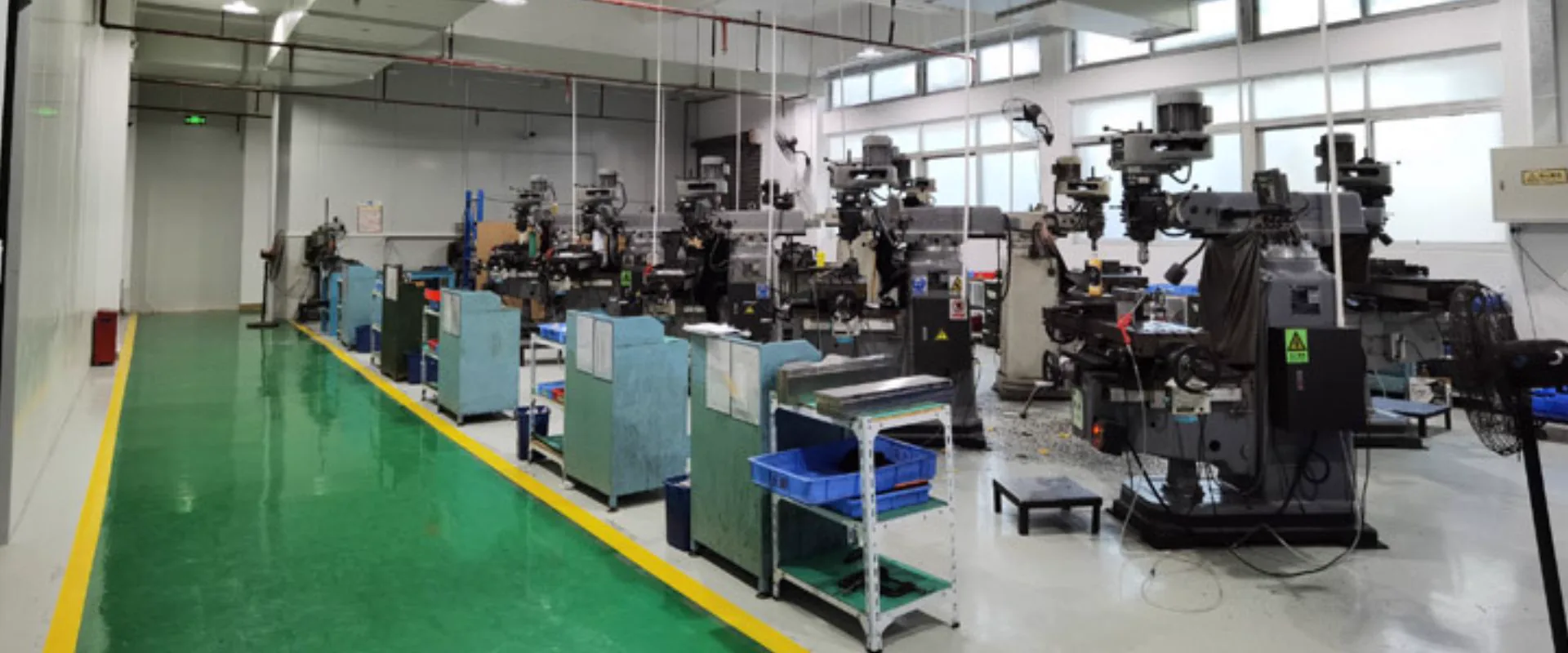
Manufacturing Operations
Die casting production, tooling fabrication, CNC machining, and quality inspection at our Nanjing facility.
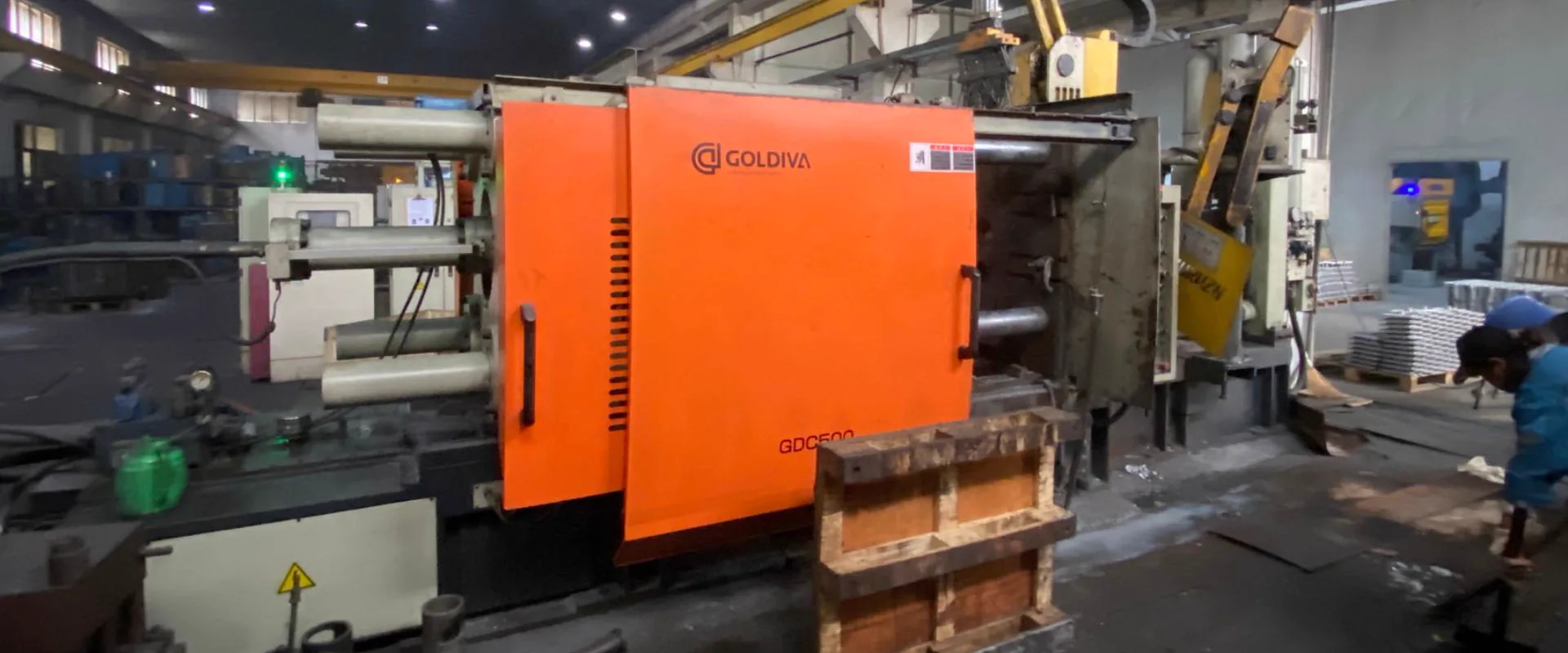
Component Detail
Close-up views of cast components showing surface finish, dimensional features, and application-ready quality.
Squeeze casting (also called liquid metal forging) is a hybrid process that combines features of casting and forging: molten metal is poured into a die cavity and then solidified under high mechanical pressure until the part is fully dense. The result is a near-pore-free casting with mechanical properties close to a forging, at a cost well below a closed-die forging.
For buyers, squeeze casting fills the gap between high pressure die casting (fast, economical, but with some internal porosity) and forging (excellent properties, but expensive tooling and limited geometry). It is a strong option for safety-critical aluminum parts that must be leak-tight, weldable, or heat treatable to high strength levels.
How the Squeeze Casting Process Works
The process cycle has five stages:
- Die preparation. A preheated steel die (typically 200-300 C) is sprayed with a release agent, similar to permanent mold casting.
- Metered pouring. A precise volume of molten alloy is ladled into the lower die half. There is no shot sleeve or high-speed injection like in HPDC.
- Die closing and pressurization. The upper die (punch) closes and applies sustained pressure, commonly 50-150 MPa, on the solidifying metal.
- Solidification under pressure. Pressure is held until the part is fully solid. Applied pressure eliminates shrinkage porosity by feeding metal into hot spots and suppressing gas pore formation.
- Ejection and finishing. The part is ejected and trimmed. Cycle times are longer than HPDC (typically 1-3 minutes) because fill and solidification are slower.
There are two variants: direct squeeze casting, where the punch contacts the melt directly over the full part surface, and indirect squeeze casting, where metal is pushed into the cavity through a gate at moderate speed and then pressurized. Indirect machines look similar to slow-shot cold chamber presses and allow slightly more complex gating.
Squeeze Casting vs High Pressure Die Casting
| Parameter | Squeeze casting | High pressure die casting |
|---|---|---|
| Fill speed | Slow (0.5-2 m/s) | Very fast (30-60 m/s) |
| Applied pressure | 50-150 MPa, sustained through solidification | 40-100 MPa intensification, brief |
| Internal porosity | Very low, near-forging density | Some gas and shrinkage porosity |
| Heat treatment | Full T6 possible without blistering | Limited; blistering risk at solution temperature |
| Weldability | Good | Poor to limited |
| Mechanical properties | Near-forging levels | Good, but ductility limited by porosity |
| Geometry complexity | Moderate; less thin-wall capability | Excellent thin walls and fine detail |
| Cycle time | 1-3 minutes | Seconds to ~1 minute |
| Tooling cost | Moderate | High |
| Best volume range | Low to medium | Medium to very high |
The practical summary: choose HPDC for complex thin-wall housings at high volume, and squeeze casting when the part is structural, pressure-tight, or must be T6 heat treated and the annual volume does not justify forging tooling.
Squeeze Casting vs Forging
Compared with closed-die forging, squeeze casting offers:
- Lower tooling cost and fewer operations - one press stroke replaces multi-stage forging dies.
- More complex geometry - undercuts, bosses, and thinner sections than a forging die can fill.
- Near-net shape with less machining stock.
- Slightly lower fatigue performance than a true forging, which still wins for the most demanding rotating or suspension parts.
For many chassis, knuckle, and bracket applications, squeeze casting delivers 80-90% of forging performance at 40-60% of the part cost.
Suitable Alloys
Squeeze casting works with a wider alloy range than conventional HPDC because slow fill reduces air entrapment and die soldering:
- A356 / A357 aluminum - the most common choice, excellent T6 response for structural parts.
- 2xxx and 7xxx wrought-series aluminum (e.g., 6061, 7075) - possible with squeeze casting, enabling very high strength cast parts.
- Al-Si-Mg casting alloys with modified eutectic for balanced castability and ductility.
- Magnesium alloys for lightweight structural brackets, related to semi-solid routes like thixomolding.
- Copper alloys for high-conductivity or wear-resistant components.
Because there is no high-speed shot, alloys with poor fluidity in thin sections can still be cast successfully - one reason wrought-grade aluminum is feasible.
Typical Applications
Squeeze casting is well established for parts where failure is not an option:
- Automotive: suspension knuckles, control arms, crossmembers, engine brackets, wheel hubs, and air-conditioning compressor housings.
- EV components: structural nodes and motor mounts that must be T6 treated and leak-tight, complementing EV die casting programs.
- Commercial vehicle: brake system components and air tanks.
- Industrial: high-pressure hydraulic bodies, similar in requirement to pressure-tight die casting applications.
- Defense and aerospace-adjacent: dense aluminum housings and brackets.
Limitations to Consider
- Cycle time is much longer than HPDC, so unit cost rises steeply at very high volumes.
- Thin walls below roughly 3-4 mm are difficult; HPDC or vacuum-assisted die casting is better for thin-wall housings.
- Size is limited by press locking force and the economics of large squeeze dies.
- Supplier base is smaller than for HPDC, so supplier audits matter - see our supplier audit checklist.
When to Specify Squeeze Casting
Specify squeeze casting when all of the following are true:
- The part is structural or safety-critical and must be heat treated to T6.
- Leak-tightness or weldability is required.
- Geometry is too complex for forging but porosity limits of HPDC are unacceptable.
- Annual volume is low-to-medium (roughly 5,000-200,000 parts), where forging tooling cannot be amortized.
If volume is high and walls are thin, HPDC with vacuum assist usually wins on cost. If fatigue life dominates and geometry is simple, forging still wins on performance.
FAQ
Is squeeze casting the same as semi-solid casting?
No. Squeeze casting starts from fully liquid metal that is pressurized during solidification. Semi-solid processes such as thixomolding start from a partially solidified, globular slurry. Both reduce porosity compared with conventional die casting, but they use different equipment and feedstock.
Can squeeze cast parts be anodized or welded?
Yes. Because the microstructure is nearly pore-free, squeeze cast aluminum parts can be welded and anodized with far fewer surface defects than conventional die castings.
What tolerance can squeeze casting hold?
Typical linear tolerances are around CT5-CT6 per ISO 8062, comparable to permanent mold casting. Critical features are usually finish-machined, as with most casting processes.
Is squeeze casting cheaper than forging?
For complex parts at low-to-medium volume, yes - typically 40-60% of the forged part cost, because one die set replaces multi-stage forging tooling and machining stock is reduced.
Related
- types of die casting
- thixocasting — the semi-solid alternative for high-integrity parts
KastMfg produces structural aluminum parts by high pressure and vacuum-assisted die casting with in-house T6 heat treatment and CNC machining. If you are weighing squeeze casting against HPDC for a structural program, send us your drawing for a free process-fit review.
Related Resources
Next steps for squeeze casting
Gravity Die Casting Process & Advantages
What is gravity die casting (permanent mold casting)? How it differs from high pressure die casting, which alloys it uses, and when to specify it.
Process GuideWhat Is Die Casting? Process, Types & Materials
Learn what die casting is, how the high-pressure process works step by step, which metals are used, and how hot and cold chamber methods differ.
ToolingDie Casting Tooling
Connect process decisions back to gate design, thermal balance, and die maintenance planning.
CapabilityQuality Control
Review inspection workflow, traceability support, and process control standards before launch.
Process GuideDie Casting Process
See how casting, trimming, machining, finishing, and inspection fit together in production.
Next StepRequest a Quote
Send your drawing package and target volume to get an engineering-backed quotation.
Need a Quote for Your Project?
Our engineering team is ready to review your requirements and provide competitive pricing with fast turnaround.
Request a Quote