Vacuum-Assisted Die Casting (VADC) for T6 Parts
Vacuum die casting (VADC) removes entrained air before injection, reducing gas porosity and enabling T6 heat treatment on aluminum castings.
Production Capabilities
Process visuals for vacuum die casting
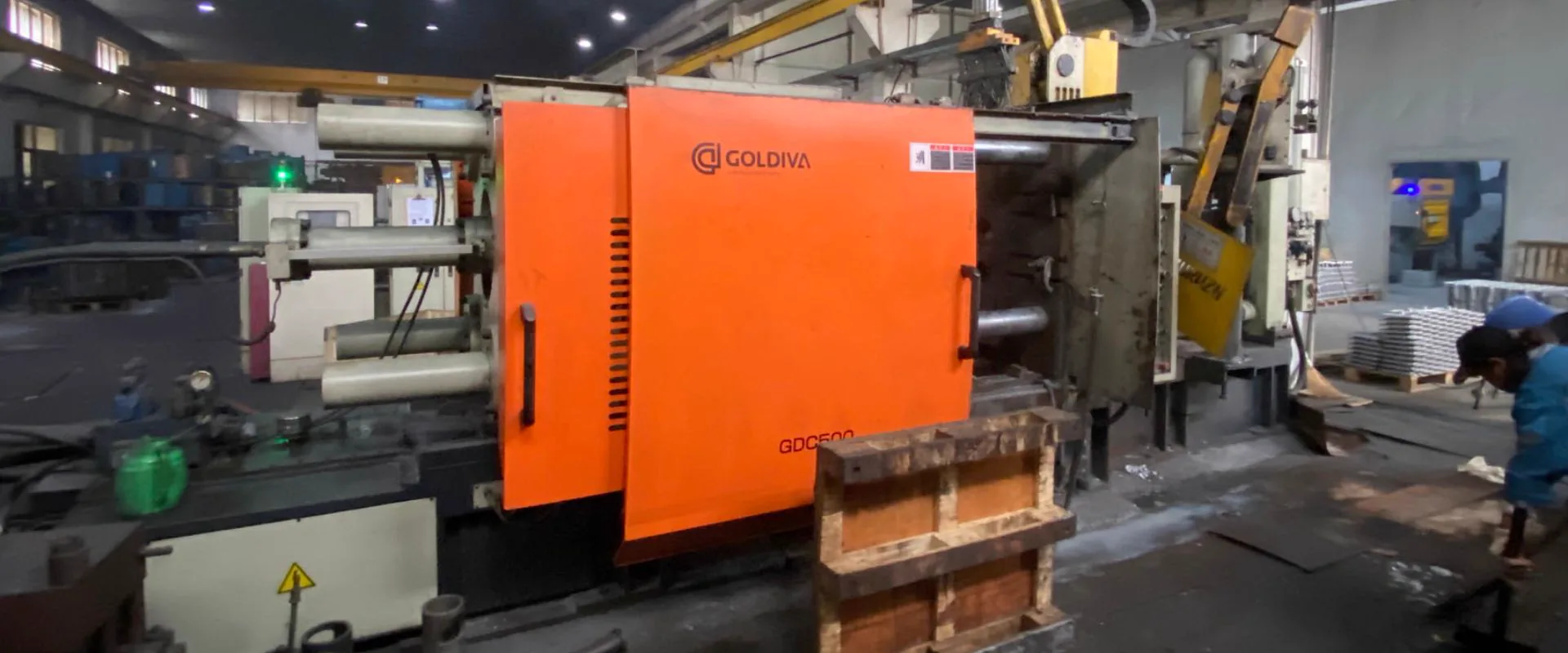
Process Overview
Core die casting processes, component types, and production setups for commercial manufacturing programs.
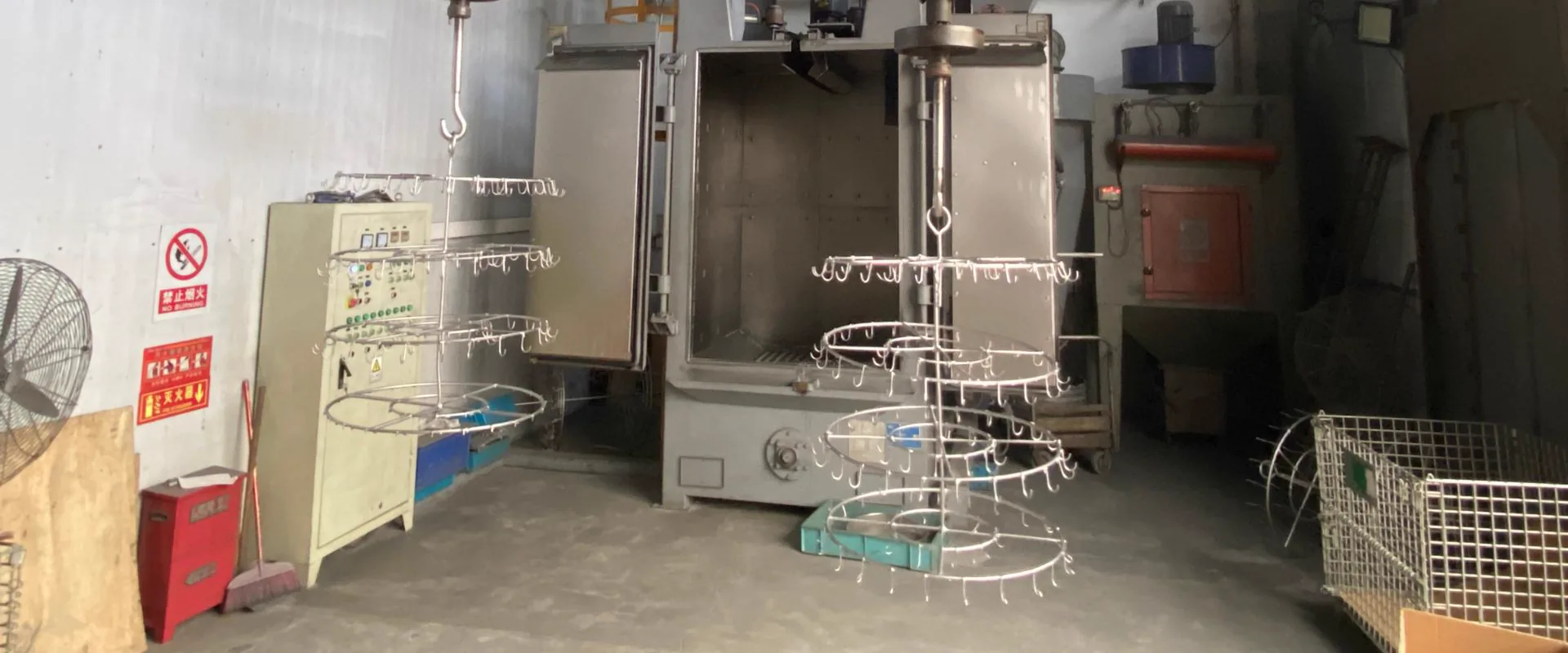
Technical Proof
Close-up and inspection images demonstrating dimensional accuracy, surface quality, and process control in production.
Standard HPDC injects metal at 20-60 m/s gate velocity into a cavity containing air at atmospheric pressure. Turbulent flow entrains and compresses this air into distributed gas porosity. For most applications, this porosity is inconsequential. For T6-treatable structural castings, pressure-tight hydraulic components, and helium-leak-tested sealed systems, it is the fundamental barrier to performance.
Vacuum-assisted die casting removes the air before it can be entrapped.
How VADC Works
- Die closes and clamps — same as standard HPDC
- Vacuum pump evacuates die cavity to <30 mbar — air drawn out through vent valves
- At vacuum trigger, injection fires — metal enters a near-vacuum environment
- Turbulence still occurs, but there is no air to compress and entrap
- Solidification, ejection, and secondary operations proceed normally
The vacuum system adds 3-5 seconds to cycle time. The die, alloy, and injection parameters are unchanged.
VADC Performance
| Metric | Standard HPDC | VADC |
|---|---|---|
| Cavity pressure at injection | 1 bar (atmospheric) | <30 mbar |
| X-ray classification (ASTM E505) | Class 3-4 typical | Class 1-2 achievable |
| T6 heat treatment | No (surface blistering) | Yes |
| Helium leak rate (manifold) | 10^-4-10^-5 mbar·L/s | <10^-6-10^-7 mbar·L/s |
| Tensile strength (A380 + T6) | 317 MPa (as-cast) | ~370 MPa |
| Yield strength (A380 + T6) | 159 MPa (as-cast) | ~300 MPa |
Why T6 Requires VADC
Standard HPDC contains gas porosity. During T6 solution treatment at 480-540°C, gas in pores expands. In thin wall sections or near the surface, this expansion creates visible blisters — destroying the part. T6 on standard HPDC fails due to blistering.
VADC physically removes the gas before casting. Parts with Class 1-2 porosity pass T6 solution treatment without blistering. This is the only reliable path to die cast T6 aluminum.
When to Specify VADC
- T6 heat treatment required (EV structural, suspension, crash safety)
- Rated working pressure >150 bar without impregnation
- Helium leak rate <10^-6 mbar·L/s required
- ASTM E505 Class 1 internal soundness required
Standard HPDC with A413 alloy or VPI impregnation addresses <100 bar applications adequately without VADC investment.
KastMfg VADC Programs
EV motor housings (T6 + cooling jacket), hydraulic manifold blocks (350 bar), chassis structural nodes (T6), pressure-tight power electronics enclosures (IP67 + T6), EV battery thermal management manifolds.
VADC inquiry: casting@kastdiecast.com | +86 138 1403 4409 | No.6, Rungu Road, Nanjing, China
Related
Related Resources
Next steps for vacuum die casting
Custom Aluminum Die Casting for OEM Parts
Custom aluminum die casting for OEM parts from drawings, including DFM, tooling, HPDC, CNC machining, finishing, inspection, and export packaging.
Commercial GuideOEM Die Casting Parts Manufacturer
custom OEM die casting parts from drawings, including tooling, HPDC, CNC machining, finishing, inspection, and export packaging.
Buyer GuideDie Casting In China
Compare landed-risk factors, communication expectations, and supplier screening criteria.
CapabilityQuality Control
Review inspection workflow, traceability support, and process control standards before launch.
Process GuideDie Casting Process
See how casting, trimming, machining, finishing, and inspection fit together in production.
Next StepRequest a Quote
Send your drawing package and target volume to get an engineering-backed quotation.
Need a Quote for Your Project?
Our engineering team is ready to review your requirements and provide competitive pricing with fast turnaround.
Request a Quote