PPAP Explained for Die Casting Buyers | Levels 1-5
PPAP Level 3 die casting guide: what each level requires, all 18 Level 3 elements, and what Cpk >=1.67 process capability means in practice for buyers.
Production Capabilities
Buyer reference visuals for PPAP Level 3 die casting

Documentation & Workflow
PPAP documentation packages, inspection reports, packaging workflow, and engineering review materials for die casting procurement.
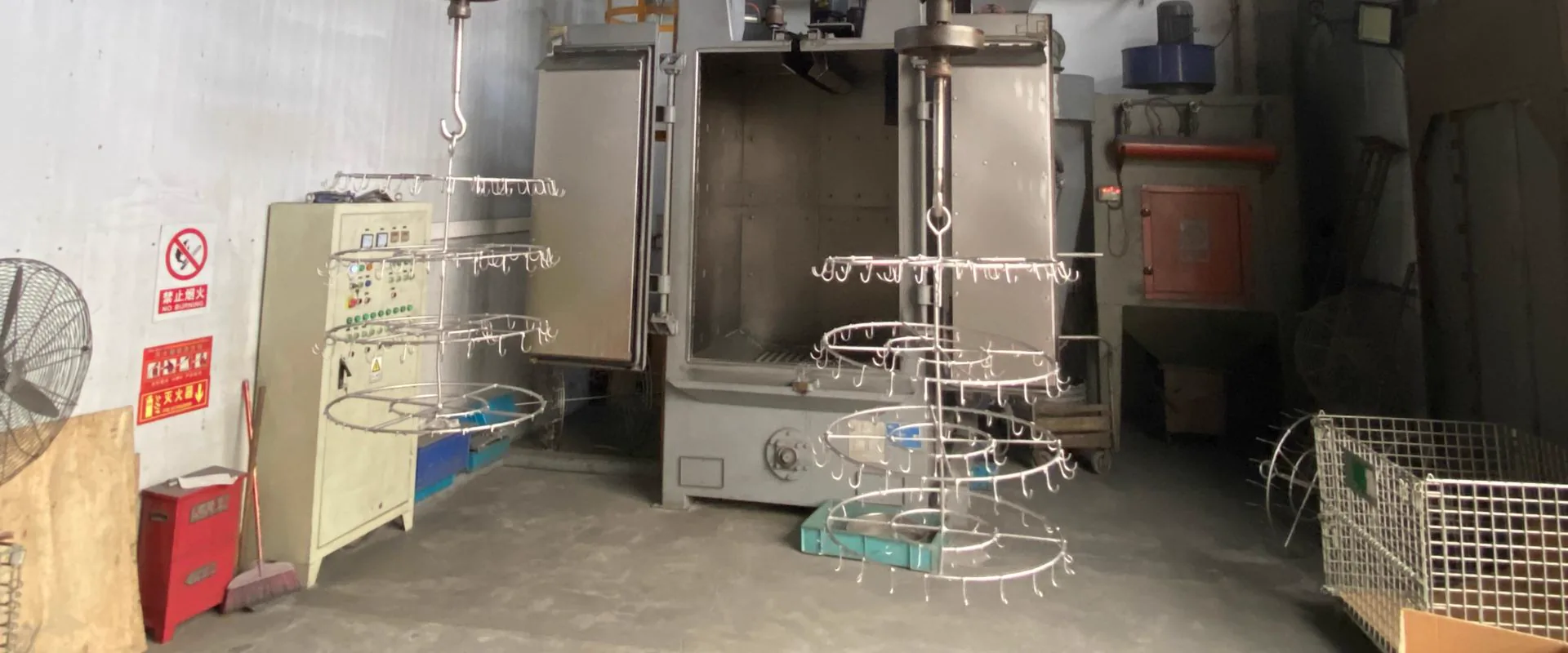
Program Management
Supplier coordination, packaging verification, first article inspection, and shipping readiness for international die casting programs.
PPAP (Production Part Approval Process) is the automotive industry's formal gate between development and production, defined by the AIAG PPAP manual (4th edition, 2006) and expected of suppliers under IATF 16949. It answers four questions that no single inspection report addresses:
- Is this the right part? (Design records, dimensional results)
- Was it made the right way? (Process flow, PFMEA, control plan)
- Can it be made consistently? (Initial process studies, Ppk)
- Can it be measured reliably? (MSA / Gage R&R)
Do You Need PPAP — or Just an FAI?
Before requesting a submission level, decide which document your program actually needs:
- Automotive or safety-critical programs: PPAP is the standard gate. Tier 1 and OEM customers default to Level 3 for new parts and tooling.
- Non-automotive industrial programs (hydraulics, electronics, lighting): A full PPAP is usually more than the program requires. Ask for a First Article Inspection (FAI) report instead — full dimensional layout on CMM, material certificate, and special test results. KastMfg issues an FAI on every new program before production release, regardless of industry. Aerospace-oriented buyers typically specify FAI in AS9102 format; automotive-adjacent programs sometimes ask for a "PPAP-lite" (Level 1 or 2).
- Deciding factor: If your customer flows down IATF 16949 requirements or the part carries safety-related characteristics, plan for PPAP. If you simply need evidence that the first production parts conform, an FAI report covers it at lower cost and shorter timeline.
PPAP Levels 1–5
| Level | What Is Submitted | Typical Use |
|---|---|---|
| 1 | Part Submission Warrant (PSW) only | Low-risk commodity parts, PPAP-lite requests |
| 2 | PSW + limited supporting data (sample parts + limited dimensional/material results) | Standard commercial parts |
| 3 | PSW + complete supporting data | Default for new automotive programs and new tooling |
| 4 | PSW + customer-defined elements only | Customer-specified subset |
| 5 | Complete data retained and reviewed at the supplier's site | Safety-critical parts, new technology, source-audit style reviews |
The customer's sourcing quality engineer sets the level. If your drawing or PO is silent, Level 3 is the automotive default and the safest assumption for planning.
Level 3 PPAP — All 18 Elements
The AIAG PPAP manual defines exactly 18 elements; the PSW is element 18, not an extra.
| # | Element | Content | KastMfg Deliverable |
|---|---|---|---|
| 1 | Design records | Drawing + revision, CAD as applicable | Customer-supplied |
| 2 | Authorized engineering change documents | ECR/ECN authorizations | If applicable |
| 3 | Customer engineering approval | Customer sign-off (when required) | Customer action |
| 4 | Design FMEA (DFMEA) | Design failure mode analysis | Customer-supplied or KastMfg (design responsibility) |
| 5 | Process flow diagram | Raw material through shipping | KastMfg |
| 6 | Process FMEA (PFMEA) | Process failure mode analysis | KastMfg |
| 7 | Control plan | All process controls and inspection | KastMfg |
| 8 | Measurement systems analysis (MSA) | Gage R&R studies | KastMfg |
| 9 | Dimensional results | Full layout, all drawing dimensions | KastMfg (CMM) |
| 10 | Material / performance test results | Chemistry, mechanical, pressure, X-ray | KastMfg |
| 11 | Initial process studies | Ppk on Special Characteristics | KastMfg |
| 12 | Qualified laboratory documentation | Calibration certs for gauges and lab scope | KastMfg |
| 13 | Appearance approval report (AAR) | Signed appearance standard (when cosmetic requirements exist) | Joint |
| 14 | Sample production parts | Parts from the significant production run | KastMfg |
| 15 | Master sample | Signed reference part, retained | KastMfg retains |
| 16 | Checking aids | Gauges, fixtures used for inspection | KastMfg retains |
| 17 | Customer-specific requirements | OEM CSRs (Ford, GM, VDA, etc.) | As applicable |
| 18 | Part Submission Warrant (PSW) | Signed cover warrant | KastMfg-signed |
The elements that decide approval for die castings
Five elements carry most of the rejection risk on casting programs:
- Dimensional results (element 9). The layout must be measured on a CMM against the drawing's datum scheme. For castings, the critical question is datums: if the drawing references machined datums, the layout must be taken after machining, on fixturing that repeats the production setup — not on a universal CMM fixture that no production part will ever see.
- Material / performance test results (element 10). Chemistry per melt (OES spectrometer, reported against ASTM B85/B86/B94 or customer spec), plus tensile results and any pressure, leak, or X-ray requirements. For plated or coated parts, this element must also include sub-tier documentation from the finisher — plating thickness, adhesion, and corrosion test records.
- Initial process studies (element 11). Capability on Special Characteristics. This is where unstable casting processes fail.
- MSA (element 8). If the Gage R&R on the bore gauge or CMM program is marginal, every other number in the package is questionable. Review %GR&R before trusting dimensional or capability data.
- Appearance approval (element 13). For visible castings (trim, housings, handles), the AAR must be signed before PPAP submission, and the boundary sample must match production intent — gates trimmed, finishes applied.
Ppk ≥1.67 — What the Capability Requirement Actually Means
AIAG requires an initial process study on Special Characteristics (safety or functionally critical features designated on the drawing). Two details buyers should know:
- The initial study uses Ppk (performance index, including all observed variation), not Cpk. Acceptance per the AIAG manual: Ppk ≥1.67 acceptable; 1.33–1.67 conditionally acceptable with customer concurrence and containment; below 1.33 not acceptable.
- The study must come from a significant production run — the AIAG default is 1–8 hours at full production rate and a minimum of 300 consecutive parts, unless the customer specifies otherwise. Data from trial conditions or a hand-tended "PPAP run" does not qualify.
What 1.67 demands in practice: for a machined bore held to ±0.015 mm, Ppk ≥1.67 means (0.015 − mean offset) must be at least 1.67 × 3 × σ. Achievable combinations include σ ≤0.002 mm with the mean held within ±0.005 mm of nominal. This is achievable with in-house CNC boring and a consistent datum fixture. It is not achievable on an as-cast dimension — casting processes cannot hold that repeatability — so any special characteristic must be assigned to a machined feature, or the tolerance must be renegotiated before PPAP, not after a failed study.
KastMfg measures a minimum 30-piece sample from the production run for capability reporting and holds the PSW if Ppk falls below 1.33 on any Special Characteristic — root cause, corrective action, re-sample, then submit.
Realistic Timeline for a Casting PPAP Package
PPAP documentation is assembled after first article approval, not in parallel with development. Plan against this sequence:
| Milestone | Typical timing |
|---|---|
| Program launch (PO received) | PPAP level and format confirmed with your SQE |
| Tooling design review | MSA plan agreed — which gauges need Gage R&R |
| First article trial + FAI approval | Program-dependent |
| Cpk/Ppk data collection from production run | Included in the run |
| Level 3 package assembly and submission | 2–4 weeks after FAI approval |
| Level 2 package | 5–7 business days after FAI approval |
| Level 1 PSW | 3–5 business days after FAI approval |
| PSW disposition by your customer | Customer-controlled |
Two planning errors to avoid: requesting Level 3 after the first production shipment has already shipped (it forces a retroactive qualification and usually a line hold), and booking downstream assembly against an assumed PSW approval date the customer controls. Confirm the level and format at RFQ stage and the timeline is routine.
Common PPAP Failures on Die Casting Programs
| Failure | Root cause | Prevention |
|---|---|---|
| Capability study fails (Ppk <1.33) | Process not stabilized before the PPAP run; parameters still being tuned during sampling | Lock process parameters at the capable set before the significant run; SPC review first |
| Measurement technique mismatch | Supplier's CMM layout uses a different datum scheme or fixturing than production; as-cast dimensions reported against machined-datum tolerances | Align the layout plan with the drawing datum scheme in writing before FAI |
| Missing sub-tier documentation | Plating, anodizing, coating, or heat treatment performed by a sub-tier; certificates never flowed into the package | Require sub-tier certs (coating thickness, adhesion, corrosion test) in the PO; confirm who owns element 10 for finished surfaces |
| Missing or late Gage R&R | MSA planned after dimensional data was already collected | Establish the MSA plan at tooling design review |
| Template PFMEA | PFMEA copied from another part, does not match the actual process flow | PFMEA reviewed line-by-line with production team before submission |
| Dimensional non-conformance in layout | Part design changed after trial approval | FAI performed at the same revision and parameter set as the PPAP run |
| Appearance rejection | AAR signed against pre-production finish samples | Boundary sample taken from the actual production-intent finishing process |
Corrosion and plating documentation is the most common gap on outsourced-finishing programs: the caster submits a clean package, but the anodize or plating certs from the sub-tier are missing or reference the wrong specification. Agree on responsibility for these documents before the run.
Questions to Ask Your Die Casting Supplier About PPAP
- Have you submitted Level 3 PPAP to an automotive Tier 1 customer before? Ask for a redacted example package.
- What capability index do you report for initial studies, and what is your target before PSW submission? Look for Ppk ≥1.67 on Special Characteristics.
- Who performs your Gage R&R studies — internal quality engineers or a third party — and what %GR&R do you accept?
- How long does package assembly take after FAI approval? Realistic: 2–4 weeks for Level 3, and longer if sub-tier finishing documentation is required.
- What is your resubmission process if the customer rejects the package or requires a design change?
What KastMfg Supports
KastMfg supports PPAP submissions at Levels 1 through 5, with Level 3 packages as the standard deliverable for automotive and safety-critical industrial programs. Our quality system is certified to ISO 9001:2015 and structured to IATF 16949:2016 requirements, with APQP, PFMEA, control plans, MSA, and SPC as standard program tools. Full equipment and process detail is documented on our die casting quality control page.
In practice, that means:
- Dimensional layouts on our CMM against the drawing datum scheme, with 100-piece studies where the control plan requires them
- OES chemistry verification per melt, with material certificates to EN 10204 type 2.2 (type 3.1 on request)
- Gage R&R studies targeting %GR&R below 10% on all gauges used for critical characteristics
- X-ray (DR/CT), pressure decay, helium leak, and salt spray testing (ISO 9227) in-house, with records archived per part
- Plating, anodizing, and coating documentation covered through our qualified finishing partners — included in the package, not left for you to chase
- Containment, root cause (8D), and corrective action within the agreed timeline if capability or dimensional results fall short
Next Step
Send your drawing through our RFQ process with the PPAP level and any customer-specific requirements noted. We confirm the level, documentation format, and MSA plan at quoting stage — so the PPAP timeline is planned into the program, not bolted on after production. For new programs, see custom die casting for our tooling and production scope, die casting with CNC machining for how critical machined features are integrated before capability studies run, and our die casting PPAP guide for how the package is assembled step by step.
PPAP submission support: casting@kastdiecast.com | +86 138 1403 4409
Related Resources
Next steps for PPAP Level 3 die casting
Die Casting Sample Approval: FAI to Production
Learn how die casting samples move from tool trial and first article inspection to buyer approval, corrections, PPAP when required, and production release.
Buyer GuideDie Casting Minimum Order Quantity and Tool Life
Die casting minimum order quantity and tool life explained: why setup amortization and freight create practical minimums, and how to size runs for volume.
Buyer GuideDie Casting In China
Use this sourcing guide to validate supplier fit, review checkpoints, and export readiness.
CapabilityQuality Control
Review inspection workflow, traceability support, and process control standards before launch.
Process GuideDie Casting Process
See how casting, trimming, machining, finishing, and inspection fit together in production.
Next StepRequest a Quote
Send your drawing package and target volume to get an engineering-backed quotation.
Need a Quote for Your Project?
Our engineering team is ready to review your requirements and provide competitive pricing with fast turnaround.
Request a Quote