Die Casting Warpage: Causes, Measurement and Fixes
Die casting warpage guide: how non-uniform cooling and residual stress distort aluminum and zinc castings, plus measurement and proven corrections.
Production Capabilities
Defect reference visuals for die casting warpage
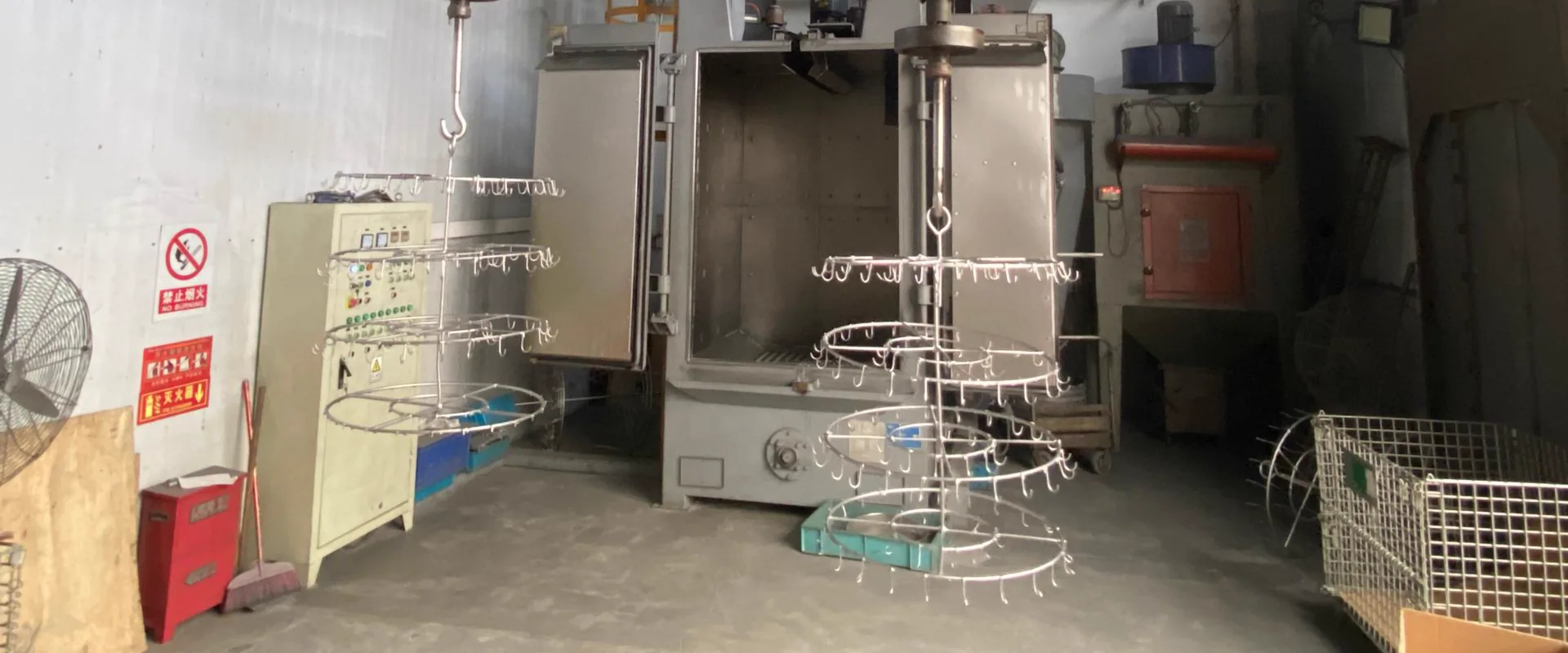
Defect Identification
Visual references including defect photographs, X-ray inspection, CT scans, and sectioned samples for accurate defect recognition.
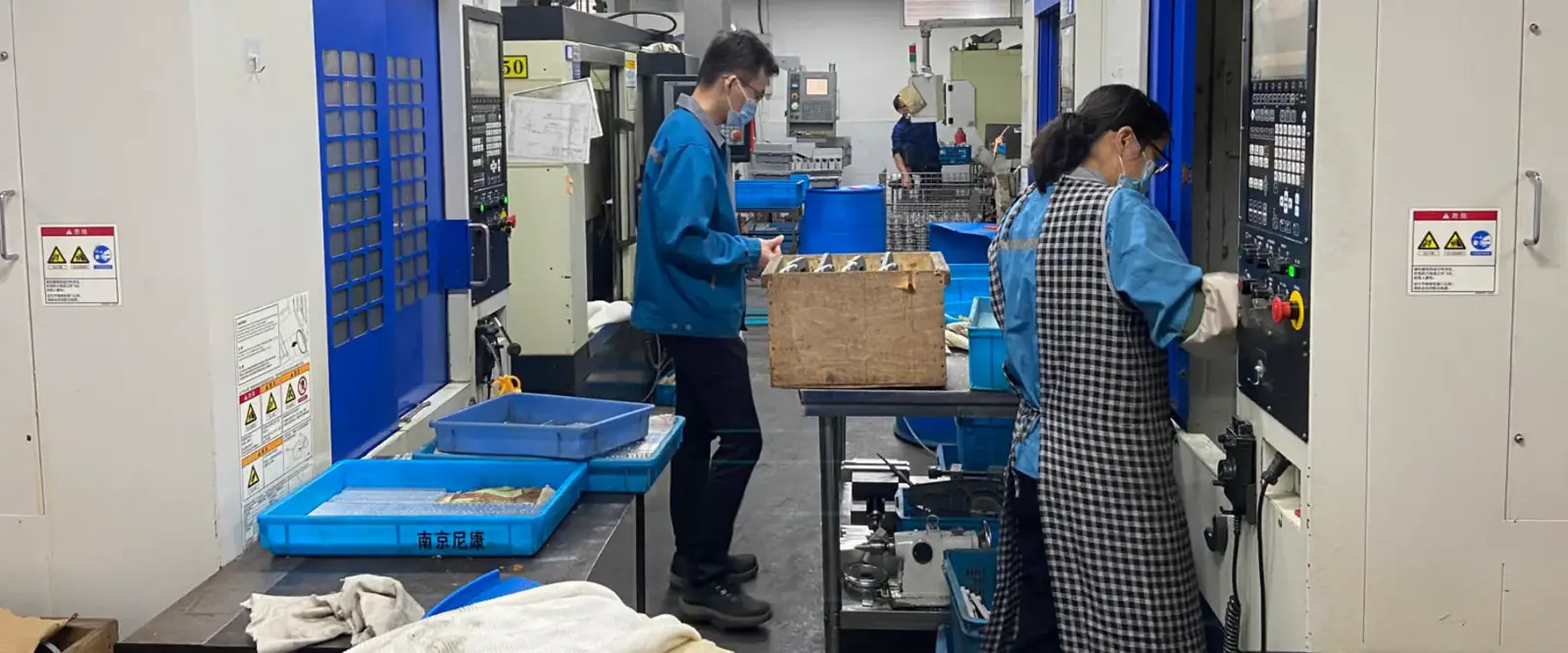
Process Control
Tooling adjustments, gating modifications, leak testing, and inspection procedures for die casting defect prevention.
Warpage is a dimensional non-conformance where the ejected casting does not conform to the drawing geometry — it is bowed, twisted, or otherwise distorted relative to the nominal shape. Unlike porosity or cold shuts, warpage does not involve a material void or unbonded interface. The material is sound; the shape is wrong.
Warpage is a particularly challenging defect because it often is not detected by standard visual inspection — a casting can look correct but measure out of tolerance on a CMM. And because it is caused by residual stress that relaxes after ejection, the distortion may not reach its final magnitude for hours or days after casting.
Why Warpage Occurs — The Residual Stress Mechanism
All die castings are produced at casting temperature (620-700°C for aluminum) and ejected at approximately 200-350°C — still well above room temperature. As the casting cools to room temperature after ejection, it contracts. If the contraction is uniform throughout the casting, the shape is preserved. If contraction is non-uniform — because different sections cool at different rates, or because the casting is constrained during cooling — residual stresses build up in the casting.
When these residual stresses exceed the material's yield strength at the relevant temperature, the casting deforms plastically — it distorts. This distortion is warpage.
Three conditions that produce warpage:
1. Non-uniform wall thickness: Thick sections retain heat longer than thin sections. As the thin section contracts to final dimensions, the thick section is still shrinking — pulling the thin section toward it. The result is a bow toward the thicker side. This is the single most common cause of warpage in die castings.
2. Asymmetric cooling in the die: If one side of the casting is adjacent to a hot die region (poor cooling) and the other side is adjacent to a well-cooled region, the two sides solidify and contract at different rates — creating a differential stress that bows the casting. This is a die design problem.
3. Premature ejection: If the casting is ejected before it has cooled sufficiently to have structural strength, the ejector pin forces distort the casting. The distortion is locked in as the casting continues to cool after ejection.
Common Warpage Patterns and Their Causes
Bow (Single-Axis Curvature)
The casting curves in a consistent direction along one axis — like a banana.
Cause: Differential cooling between two faces (die cooling asymmetry), or consistent wall thickness gradient from one end to the other.
Example: A long housing that is thicker on one side — the thick side cools slower, contracts more during the post-ejection cooling phase, and bows the casting toward the thick side.
Twist (Multi-Axis Distortion)
The casting has curvature in multiple directions simultaneously — like a potato chip.
Cause: Non-uniform cooling from multiple directions, typically in castings with complex geometry and cooling channels that do not provide symmetric heat extraction. Also common in parts with significant cross-sectional area changes — where thick sections are not uniformly distributed.
Saddle / Camber (Flatness Loss on a Nominally Flat Face)
A face that should be flat (a gasket face, a mounting base) measures out of flat.
Cause: This is very commonly a die temperature asymmetry problem — one side of the die cavity is hotter than the other during fill and solidification, creating differential shrinkage across the face.
Measuring Warpage
CMM (Coordinate Measuring Machine): The definitive measurement method. The casting is fixtured in the datum scheme defined by the drawing. All surface points on the warped face are measured. Flatness, straightness, and profile deviation are calculated from the point cloud.
Surface plate and feeler gauge: Quick shop-floor method. Casting is placed on a granite surface plate (reference flat). A feeler gauge measures the gap between the casting and the plate at the worst point. Inaccurate for complex warpage patterns but adequate for simple bow detection.
Laser scanning (3D scanning): Non-contact method producing a full-surface deviation map relative to nominal. Useful for complex warped geometries where CMM point sampling is insufficient.
Warpage Tolerance — What Is Acceptable?
Warpage tolerance is typically expressed as flatness, straightness, or profile in GD&T. Typical as-cast flatness on aluminum HPDC:
| Flatness / Straightness | Typical As-Cast (Large Face) | After CNC Face Milling |
|---|---|---|
| General surface | 0.2-0.8 mm per 100 mm | 0.01-0.05 mm |
| Sealing face (gasket) | Must be machined | 0.02-0.05 mm |
| Bolt mounting face | 0.2-0.5 mm | 0.02-0.05 mm |
Key point: For sealing faces, mounting faces that must be coplanar with mating parts, and any face with flatness specification tighter than ~0.15 mm, machining is required. Warpage-free as-cast flatness on large aluminum die castings is not achievable at these levels.
Prevention — Design Approaches
Uniform wall thickness: The most effective warpage prevention. A part with uniform 3 mm walls throughout contracts uniformly in all directions. Every departure from uniform thickness creates differential contraction and warpage risk.
Coring out thick sections: Where geometry requires thick sections, core them out to hollow cylinders or open pockets. A hollow cylinder has the same bending stiffness as a solid cylinder at significantly reduced mass — and no thick section to create differential shrinkage.
Symmetric rib layout: Ribs added to improve stiffness should be symmetric about the part's neutral plane where possible. Asymmetric rib patterns create asymmetric stiffness — the stiffer side resists contraction, the less stiff side deforms.
Gating and overflow symmetry: For nearly symmetric parts, symmetric gating (gates at both ends rather than one end) produces more uniform fill and more uniform residual stress distribution — reducing warpage tendency.
Prevention — Process and Tooling Approaches
Balanced cooling channels: Cooling channel layout in the die should provide symmetric, balanced heat extraction from both faces of each wall section. KastMfg uses thermal simulation (part of the mold flow analysis conducted before tooling is cut) to identify hot spots and optimize cooling channel placement.
Correct ejection timing: The casting must have cooled sufficiently before ejection to have structural strength. Ejecting too early — to maximize production rate — produces distorted castings. KastMfg's cycle time parameters are set based on wall thickness and alloy, not squeezed to maximum machine speed.
Fixturing during cooling: For castings prone to warpage due to geometric constraints that cannot be changed (thin flat panels, long slender arms), clamping the casting in a conforming fixture immediately after ejection and holding until it reaches near-room temperature prevents post-ejection distortion. This adds cost but eliminates the warpage for parts where it cannot be prevented by design or die changes alone.
T5 aging: T5 heat treatment (artificial aging at 150-175°C for 3-5 hours) relieves residual casting stress — reducing post-casting dimensional drift and improving long-term stability. For precision castings where dimensions must be stable over time (instrument housings, precision fixtures), T5 is often specified for this stress relief benefit rather than for mechanical property improvement.
Dedicated stress relief — what it can and cannot do: Distinct from the T5 aging above, a stress-relief soak holds the casting at elevated temperature so residual stresses relax, stabilizing dimensions against drift in storage or through subsequent machining. Common practice sits in a broad 200-250°C band depending on alloy and part geometry — this is not a universal standard cycle, and parameters must be validated for the specific alloy and casting before production release. What stress relief cannot do: correct a casting that is already warped. Relief lowers the stresses still in the part; it does not move a distorted casting back to nominal, and straightening a part before relieving it locks a new stress pattern in.
Hot tearing is not warpage: A crack found at inspection is usually a different mechanism. Hot tearing forms during solidification — the semisolid casting is restrained by the die, cores, or its own geometry as it contracts just after initial freeze, and tears where the hot material cannot accommodate the strain. Warpage develops after solidification, when residual stress from non-uniform cooling relaxes past the material's yield. One is a crack; the other is distortion with otherwise sound material — the fixes rarely overlap, which is why the diagnosis comes before the correction.
Warpage in Thin-Wall Castings
Thin-wall castings (wall thickness below 2 mm) are most susceptible to warpage because:
- The cooling rate is fastest — largest temperature gradient between the die-contacting surface and the interior
- The bending stiffness is lowest — easiest to deform under residual stress
- The ejector pin force to wall section ratio is highest — most likely to distort at ejection
For thin-wall castings with flatness requirements, KastMfg's standard approach is: DFM review for wall uniformity → die temperature optimization → T5 stress relief if needed → fixture verification in production.
Warpage and distortion consultation: casting@kastdiecast.com | +86 138 1403 4409 | No.6, Rungu Road, Nanjing, China
Related Defect & Quality Guides
- die casting defects
- cold shut die casting
- DFM die casting
- aluminum die casting — alloys, tonnage range, and capability overview for distortion-prone parts
Related Resources
Next steps for die casting warpage
Gas Porosity in Die Casting: Causes and Prevention
Gas porosity die casting guide: formation mechanisms, ASTM E505 classes, X-ray and CT detection, consequences for sealing and strength, and prevention.
Defect GuideMisrun & Short Shot in Die Casting: Causes & Fixes
Misrun and short shot in die casting: how to identify incomplete cavity fill, root causes in thin walls and long flow paths, and proven HPDC process fixes.
Quality GuideDie Casting Defects
Compare common defect types, causes, and corrective actions from a buyer and engineering perspective.
CapabilityQuality Control
Review inspection workflow, traceability support, and process control standards before launch.
Process GuideDie Casting Process
See how casting, trimming, machining, finishing, and inspection fit together in production.
Next StepRequest a Quote
Send your drawing package and target volume to get an engineering-backed quotation.
Need a Quote for Your Project?
Our engineering team is ready to review your requirements and provide competitive pricing with fast turnaround.
Request a Quote