What Is Die Casting? Process, Types & Materials Explained
Learn what die casting is, how the process works, what materials are used, and the difference between hot chamber and cold chamber methods. Complete guide with diagrams.
Supporting Visuals
Production images for this page
These images are pulled from your current KastMfg asset library. Page-specific files automatically override shared fallback visuals when you add them later.
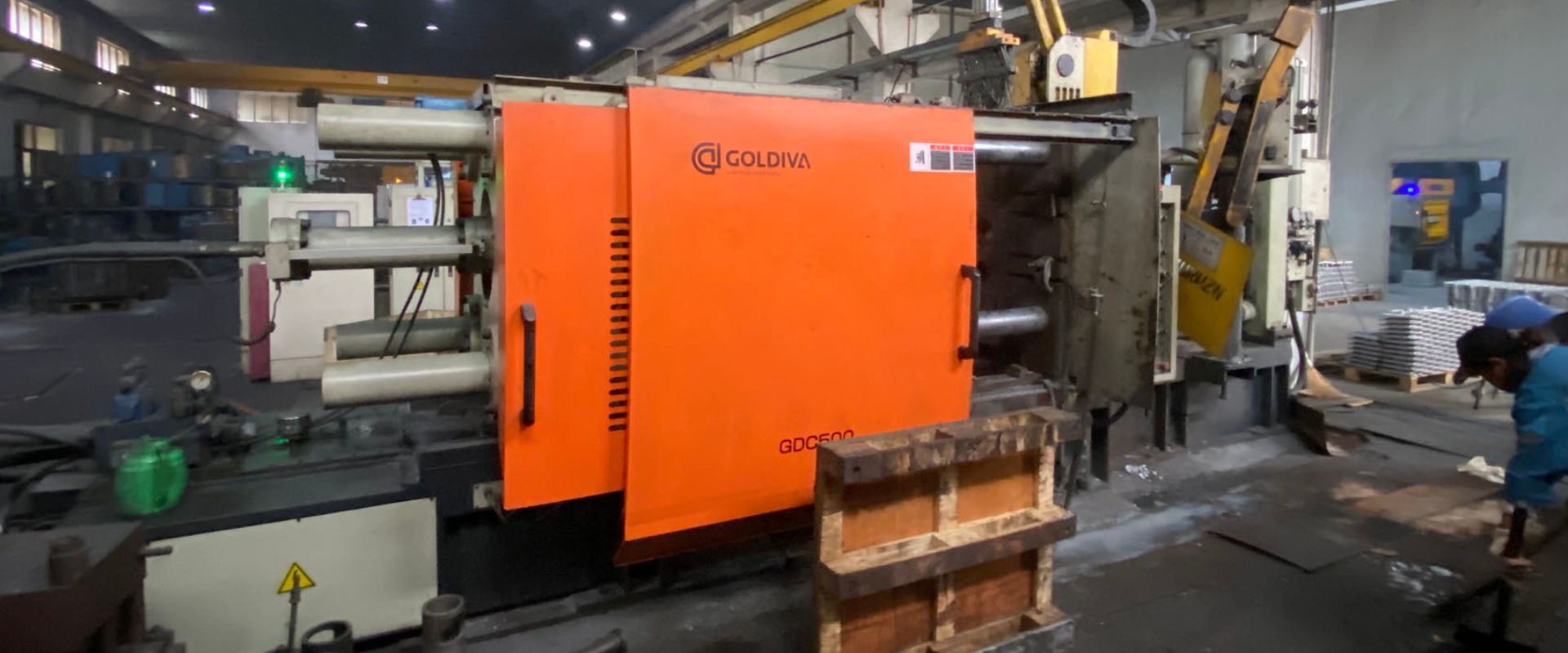
Factory or Process Image
Reserve space for a production, tooling, or inspection photo that visually supports the main topic.
Best as a wide industrial image
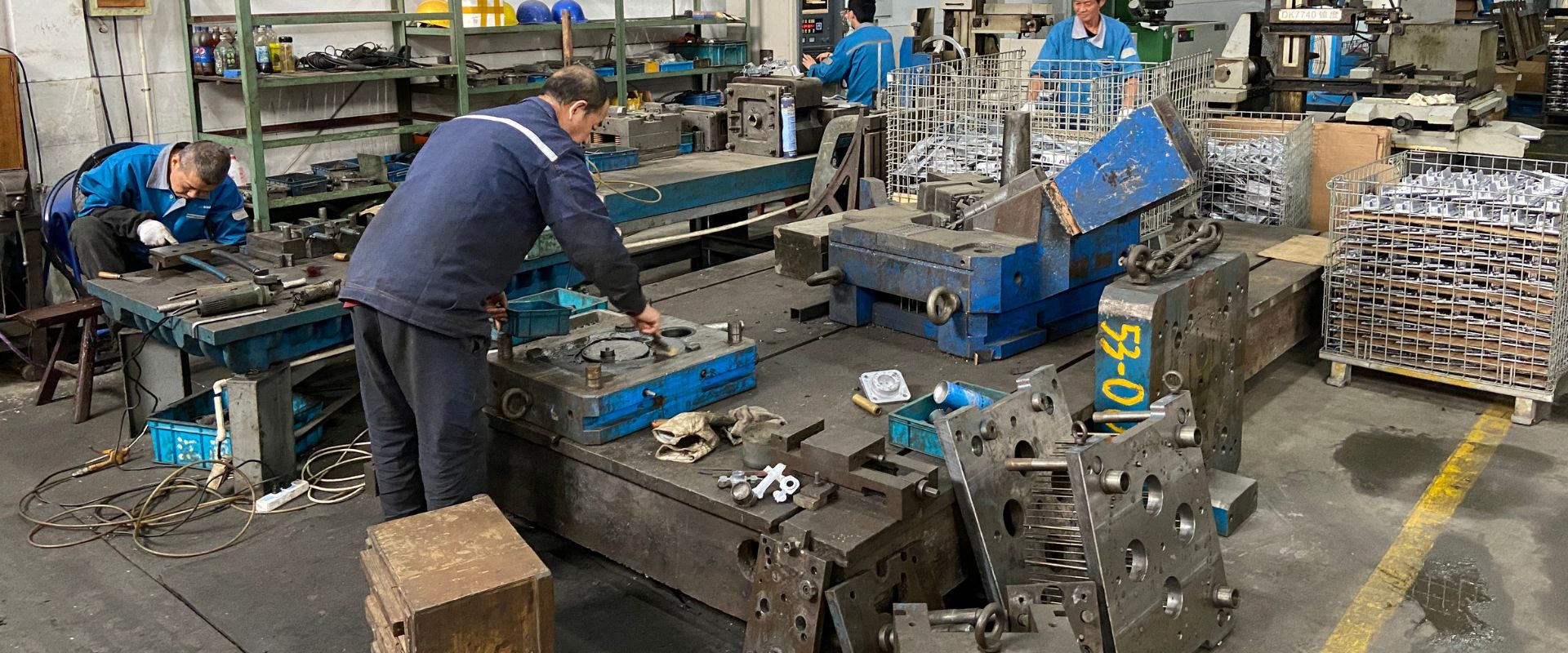
Component Detail Image
Use a close-up of a casting, surface finish, machined feature, or application component to add visual proof.
Best as a detail or macro shot
What Is Die Casting? A Complete Guide to the Process, Materials, and Applications
Die casting is a high-pressure metal forming process in which molten metal is injected into a precision-machined steel die (mold) at pressures of 10 to 175 MPa. The metal fills the die cavity in milliseconds, solidifies under continued pressure, and is then ejected as a near-net-shape component -ready for machining, finishing, or direct assembly.
Die casting is one of the most widely used manufacturing processes for metal parts globally, producing billions of components each year across the automotive, electronics, lighting, and industrial machinery sectors.
Die Casting Meaning -Simple Definition
The term die casting combines two words:
- Die -the hardened steel mold into which metal is injected
- Casting -the process of shaping molten metal in a mold
Together, die casting refers specifically to the high-pressure injection of molten non-ferrous metals into a reusable steel die. It is distinct from sand casting (which uses expendable molds) and investment casting (which uses wax-pattern ceramic molds).
How Does Die Casting Work? Step-by-Step
Step 1 -Die Preparation
The two halves of the steel die (cover half and ejector half) are closed and clamped under pressure equal to the injection force. The die cavity is sprayed with a release agent to aid ejection and extend die life.
Step 2 -Metal Injection
Molten alloy is ladled or automatically fed into a shot sleeve (cold chamber) or drawn directly from a submerged gooseneck (hot chamber). A hydraulic plunger injects the metal into the die at velocities of 10-100 m/s.
Step 3 -Solidification Under Pressure
The metal fills the cavity in 10-100 milliseconds and solidifies under intensification pressure (up to 100 MPa). This suppresses porosity and fills fine surface detail.
Step 4 -Ejection
After a preset dwell time (0.5- seconds depending on wall thickness and alloy), the die opens and ejector pins push the part out of the cavity.
Step 5 -Trimming
Gates, runners, and overflow wells -required for metal flow control -are removed by a trimming die press or CNC.
Step 6 -Secondary Operations
Parts proceed to CNC machining, heat treatment, surface finishing, and quality inspection as required by the drawing.
Die Casting Diagram
Molten Metal →Shot Sleeve →Injection Plunger →Die Gate →Die Cavity
→ Solidification Under Pressure
→ Die Opens →Ejector Pins →Part Out
→ Trim →Inspect →Secondary Operations
What Is Die Cast Metal?
Die casting is used exclusively with non-ferrous metals -metals that do not contain significant iron. The most common die cast metals are:
| Metal | Common Alloys | Density (g/cm³) | Key Properties |
|---|---|---|---|
| Aluminum | A380, ADC12, A360, A413 | 2.74 | Lightweight, corrosion resistant, thermally conductive |
| Zinc | Zamak 3, Zamak 5, ZA-8 | 6.60 | Thinnest walls, best surface finish, longest die life |
| Magnesium | AZ91D, AM60B | 1.74 | Lightest die cast metal, excellent EMI shielding |
| Copper (limited) | Brass alloys | 8.5 | High strength, conductivity -niche applications |
Types of Die Casting
High Pressure Die Casting (HPDC)
The most common form. Metal is injected at 10-75 MPa. Suitable for high-volume, tight-tolerance production. Aluminum, zinc, and magnesium are all processed this way.
Low Pressure Die Casting (LPDC)
Metal is pushed into the die from below at 0.03-1.1 MPa using pressurized gas. Used for large aluminum parts such as automotive wheels where porosity requirements are strict.
Gravity Die Casting
Molten metal flows into the die under gravity alone -no pressure applied. Also called permanent mold casting. Produces parts with less porosity than HPDC but lower production rates and less dimensional precision.
Hot Chamber Die Casting
The injection mechanism is submerged in the melt. Fast, automated, low-pressure -suitable for zinc and other low-melting-point alloys only.
Cold Chamber Die Casting
Metal is ladled separately into a shot sleeve for each cycle. Required for aluminum and magnesium, which would corrode a submerged injection system.
Die Casting vs Other Casting Methods
| Parameter | Die Casting | Sand Casting | Investment Casting |
|---|---|---|---|
| Tolerances | CT4-CT6 (best) | CT11-CT13 | CT4-CT6 |
| Surface finish | Ra 1.6-2.2 μm | Ra 6-15 μm | Ra 1.6-2.2 μm |
| Min wall thickness | 0.8-1.2 mm | 3- mm | 0.5-1.0 mm |
| Volume sweet spot | 10,000-millions | 1-10,000 | 100-10,000 |
| Tooling cost | High | Low | Medium |
| Unit cost at volume | Very low | High | Medium |
Advantages and Disadvantages of Die Casting
Advantages
- High dimensional accuracy -tolerances to CT4 achievable without post-casting machining
- Excellent surface finish -Ra 1.6-2.2 μm as-cast; suitable for direct coating or plating
- High production rates -cycle times of 20-120 seconds per shot
- Thin walls achievable -0.4 mm in zinc, 0.8 mm in magnesium
- Complex geometry -internal passages, thin ribs, and integral inserts possible
- Long tool life -a well-maintained zinc die can exceed 1,000,000 shots
- Economical at volume -low unit cost offsets tooling investment above ~10,000 pieces/year
Disadvantages
- High tooling cost -H13 steel production tooling costs $5,000-80,000
- Limited to non-ferrous metals -steel and iron cannot be die cast
- Porosity risk -HPDC parts contain some gas porosity that precludes heat treatment in some cases
- Size limitations -parts above ~20 kg are difficult to produce economically
- Wall thickness uniformity required -significant variation causes shrinkage and warpage
Die Casting Applications
Die casting produces components found in virtually every manufactured product:
- Automotive -engine brackets, gearbox housings, EV motor housings, door handles
- Electronics -heat sinks, connector housings, server chassis, smartphone frames
- Lighting -LED heat sink housings, streetlight enclosures
- Industrial machinery -hydraulic manifolds, pump covers, motor end shields
- Telecommunications -5G enclosures, antenna brackets
- Consumer hardware -power tool housings, furniture fittings, door hardware
Frequently Asked Questions
What is die casting used for?
Die casting is used to produce high-volume, precision metal parts for industries including automotive, electronics, lighting, industrial machinery, and telecommunications. Any application requiring repeatable, complex metal components in aluminum, zinc, or magnesium is a candidate.
Is die casting the same as injection molding?
No. Injection molding processes thermoplastic or thermoset polymers (plastics). Die casting processes metals. Both use high pressure to fill a mold, but the materials, temperatures, pressures, and resulting properties are entirely different. Die cast parts are metal and significantly stronger, harder, and more thermally conductive than equivalent plastic parts.
What is die cast material?
Die cast material refers to the metal alloy used in the die casting process. Common die cast materials include aluminum alloys (A380, ADC12), zinc alloys (Zamak 3, Zamak 5), and magnesium alloys (AZ91D, AM60B). The term "die cast" also describes the finished part -a "die cast component" is a part produced by the die casting process.
How strong is die cast metal?
Die cast aluminum (A380) has a tensile strength of approximately 317 MPa and yield strength of 159 MPa. Zamak 5 zinc reaches 331 MPa tensile. With heat treatment (T5/T6 on aluminum), tensile strength can reach 350-400 MPa. Die cast parts are significantly stronger than equivalent plastic parts and competitive with many wrought aluminum products.
KastMfg Manufacturing Co., Ltd. Email: yaoqingpu1983@gmail.com | Phone: +86 138 1403 4409 No.6, Rungu Road, Nanjing, China
Related Resources
Continue the research path
Types of Die Casting -HPDC, LPDC, Gravity, Hot & Cold Chamber Explained
Complete overview of all die casting types: high pressure, low pressure, gravity, hot chamber, cold chamber, vacuum, and squeeze die casting -with comparisons and best applications.
ToolingDie Casting Tooling
Connect process decisions back to gate design, thermal balance, and die maintenance planning.
CapabilityQuality Control
Review inspection workflow, traceability support, and process control standards before launch.
Process GuideDie Casting Process
See how casting, trimming, machining, finishing, and inspection fit together in production.
Need a Quote for Your Project?
Our engineering team is ready to review your requirements and provide competitive pricing with fast turnaround.
Request a Quote