Surface Finishing for Die Casting | Powder Coat, Anodizing, Shot Blast | KastMfg
KastMfg offers complete in-house surface finishing for die casting parts: shot blasting, powder coating, anodizing Type II and III, chromate conversion coating, and e-coating. Finished parts from a single source.
Supporting Visuals
Supporting visuals for die casting surface finishing services
These images are pulled from your current KastMfg asset library. Page-specific files automatically override shared fallback visuals when you add them later.
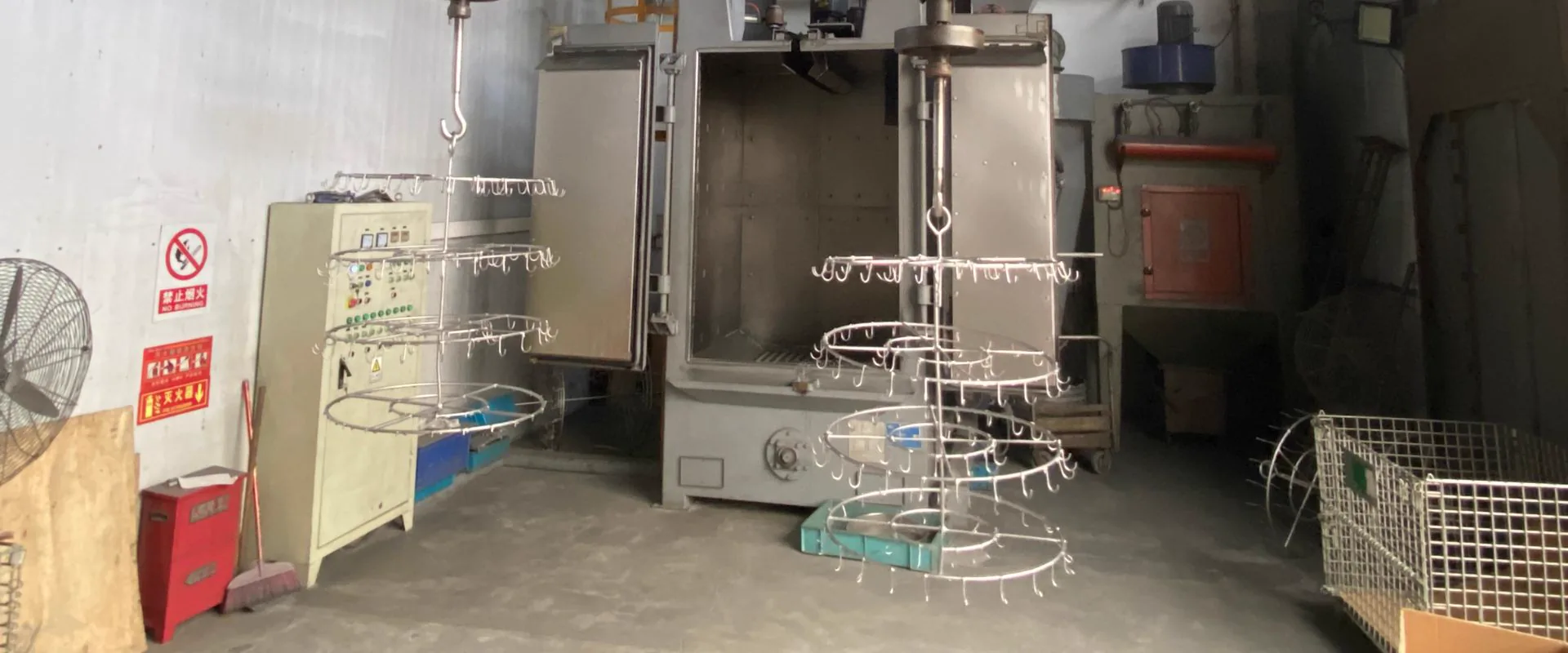
Process Workflow Photo
Reserve this slot for a machining, finishing, tooling, or assembly workflow image that supports the service scope.
Best as a wide production-floor image
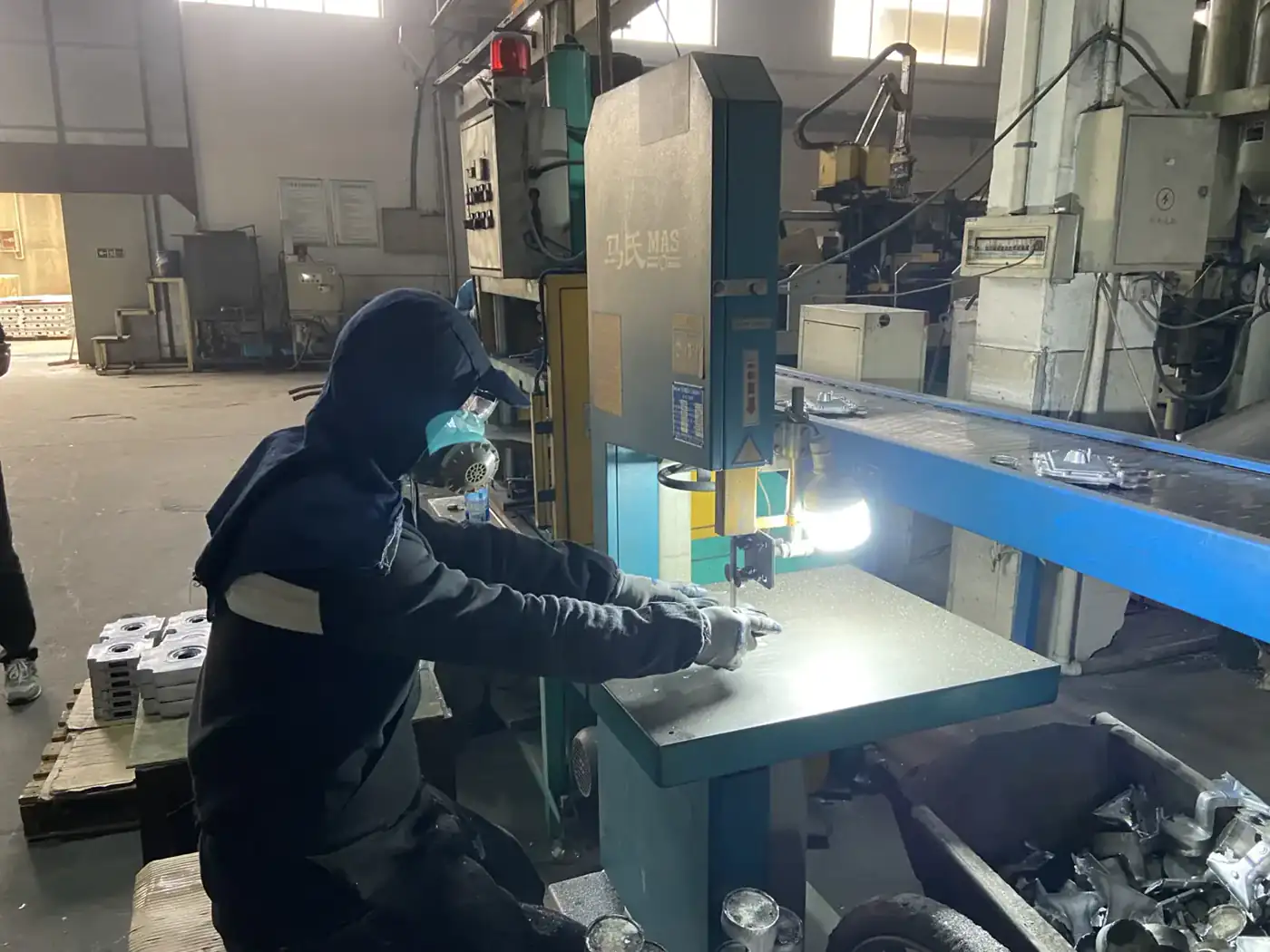
Close-Up Detail Photo
Use a tight crop of tooling, machined features, surface condition, or inspection setup to reinforce technical credibility.
Best as a detailed feature shot
The functional and aesthetic performance of a die casting is often determined as much by its surface finishing as by its casting geometry. Corrosion resistance, wear resistance, electrical conductivity, paint adhesion, and cosmetic appearance all depend on selecting and executing the right finishing process.
KastMfg's integrated surface finishing capability means that castings produced in our die casting facility move directly to finishing -without leaving the site, without transit damage risk, and without the scheduling coordination that external subcontractors require. Finished, ready-to-install components are delivered to customers who need only to assemble.
Surface Finishing Processes Available
Shot Blasting
Process: High-velocity steel shot or grit is propelled against the casting surface, mechanically removing flash residue, surface scale, and the thin oxide layer from the as-cast surface. Creates a uniform matte texture.
Surface result: Ra 3.2-3.3 μm (matte, uniform). Removes as-cast skin irregularities.
Best for: Functional parts where cosmetic appearance is secondary; preparation before powder coating or e-coating; parts where a clean, uniform matte surface is the final requirement.
Note: Shot blasting is a preparatory process for most coatings. All powder-coated and e-coated KastMfg parts are shot blasted first.
Powder Coating
Process: Electrostatically charged dry powder is sprayed onto the part and adheres uniformly to all surfaces. The coated part is cured in an oven at 180-200°C, cross-linking the powder into a hard, continuous film.
Coating thickness: 60-120 μm standard; adjustable by application.
Colors: Full RAL and Pantone color matching. Gloss, semi-gloss, matte, and textured finishes available.
Performance: Excellent UV resistance, impact resistance, and corrosion protection. Salt spray resistance exceeds 500 hours per ISO 9227 on properly prepared aluminum substrates.
Best for: Industrial enclosures, outdoor-exposed components, LED lighting housings, machinery covers. Any application requiring a durable, color-specific coating.
Anodizing -Type II (Standard)
Process: Electrochemical oxidation of the aluminum surface in a sulfuric acid bath, growing a controlled aluminum oxide layer of 5-15 μm. The oxide layer is integral to the base metal -it cannot chip or peel.
Surface result: Hard, corrosion-resistant, electrically insulating oxide layer. Can be sealed clear (natural silver-gray appearance) or dyed in standard colors (black, bronze, gold, red, blue).
Hardness: 250-300 HV (significantly harder than the base A380 alloy at ~80 HRB).
Best for: Electronics housings (heat sinks, RF enclosures), architectural components, consumer-facing parts requiring a premium metallic appearance, parts requiring electrical insulation on the surface.
Anodizing -Type III (Hard Anodizing)
Process: The same electrochemical oxidation as Type II, but performed at lower temperature and higher current density, producing a dense oxide layer of 25-100 μm with exceptional hardness.
Hardness: 60+ HRC equivalent (400-500 HV). Comparable to hard chrome plating.
Wear resistance: Suitable for sliding contact, abrasive environments, and repeated mechanical contact.
Best for: Hydraulic cylinder bores (internal diameter hard anodized), sliding pistons, valve components, mechanical wear surfaces, aerospace and defence components.
Chromate Conversion Coating (Alodine / Chem Film)
Process: Chemical immersion produces a thin (0.5- μm), conductive chromate conversion film on aluminum. Provides corrosion protection and dramatically improves the adhesion of subsequent paint or adhesive layers.
Key property: Electrically conductive -unlike anodizing, chromate conversion maintains electrical continuity, making it suitable for EMI grounding applications.
Compliant variants: Trivalent chromate (Cr3+ RoHS compliant) available as standard. Hexavalent (Cr6+) on specific customer request where permitted.
Best for: Electronics and telecommunications housings requiring EMI grounding; aerospace and defence components; pre-treatment before structural adhesive bonding; components requiring both corrosion protection and electrical conductivity.
E-Coating (Electrocoat / Cathodic Epoxy)
Process: Parts are submerged in a water-based epoxy paint bath and an electrical current deposits a uniform epoxy film on all surfaces -including internal passages, recesses, and blind holes that spray methods cannot reach.
Coverage: 100% surface coverage including interior passages (up to a penetration limit). Uniform film thickness 15-20 μm regardless of part complexity.
Performance: Excellent corrosion resistance; excellent coverage; compatible with over-coating by powder or liquid paint.
Best for: Complex automotive and industrial parts with internal surfaces (gearbox housings, hydraulic manifolds); parts requiring corrosion protection on interior surfaces; high-volume automotive programs where uniform, reproducible coating is required.
Finish Selection Guide
| Requirement | Recommended Finish |
|---|---|
| Maximum corrosion protection (outdoor) | Powder coating over shot blast |
| Decorative metallic appearance | Type II anodizing (clear or dyed) |
| Wear surface (sliding contact) | Type III hard anodizing |
| EMI shielding / electrical continuity | Chromate conversion coating |
| Complex internal surfaces | E-coating |
| Pre-coating surface preparation | Shot blasting |
| Chrome plating (zinc substrates) | Partner referral (not in-house) |
Inspection and Quality Assurance
All surface-finished parts are inspected before shipment:
- Coating thickness -measured by eddy current (non-magnetic) or magnetic induction gauges at multiple points per part
- Adhesion -cross-hatch adhesion test per ISO 2409 for powder and e-coated parts
- Salt spray resistance -periodic batch testing per ISO 9227; test panels run with production batches for critical programs
- Visual inspection -100% visual check for sags, fisheyes, holidays, runs, and color uniformity
- Color conformance -spectrophotometer measurement against RAL/Pantone target for color-critical programs
Frequently Asked Questions
Can you anodize A380 aluminum die castings?
Yes, with an important caveat: A380 contains silicon (8.5-10.5%) and copper (2-%), which reduce anodizing quality compared to wrought aluminum alloys. The resulting anodized layer on A380 is functional but not as uniform or cosmetically consistent as anodizing on 6061 or 5052 wrought alloys. For cosmetically demanding anodized parts, we recommend discussing alloy options -A360 or A413 anodize better than A380.
What colors are available for powder coating?
All RAL and Pantone colors are available. We maintain standard stock powders for common industrial colors (RAL 7035 light gray, RAL 9005 black, RAL 5010 blue). Custom colors require a minimum quantity for economic powder procurement -typically 500+ parts per color.
Can you finish only specific areas of a part (selective finishing)?
Yes. Masking of bearing bores, sealing faces, threaded holes, and other features that must remain uncoated is standard practice. Masking details are reviewed during the DFM process and documented in the control plan.
Surface finishing inquiry: yaoqingpu1983@gmail.com | +86 138 1403 4409 | No.6, Rungu Road, Nanjing, China
Related Resources
Next steps for die casting surface finishing services
Heat Treatment for Aluminum Die Castings | T5 and T6 | KastMfg
KastMfg provides T5 artificial aging and T6 solution treatment for aluminum die casting parts. Improve tensile strength by 20-30%, yield strength by 40-50%. Full process explanation and capability data.
Case StudyCase Studies
See how die casting, machining, sealing, and finishing requirements were delivered on production programs.
CapabilityQuality Control
Review inspection workflow, traceability support, and process control standards before launch.
Process GuideDie Casting Process
See how casting, trimming, machining, finishing, and inspection fit together in production.
Need a Quote for Your Project?
Our engineering team is ready to review your requirements and provide competitive pricing with fast turnaround.
Request a Quote