Die Casting Leak Testing: Air Decay & Helium
Die casting leak testing guide: air decay, nitrogen, and helium mass spectrometer methods, sensitivity comparison, and pressure test specification basics.
Production Capabilities
Supporting visuals for die casting leak testing
Manufacturing Operations
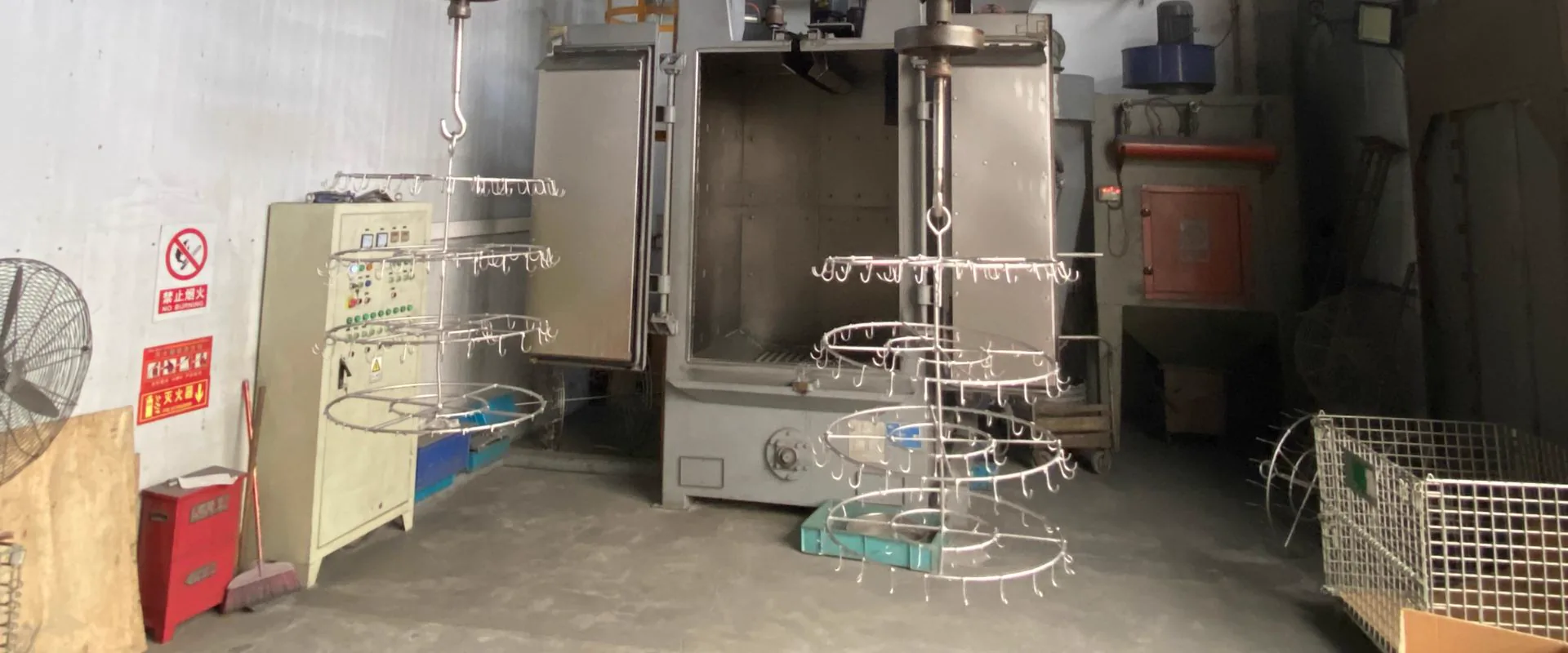
Die casting production, tooling fabrication, CNC machining, and quality inspection at our Nanjing facility.
Component Detail
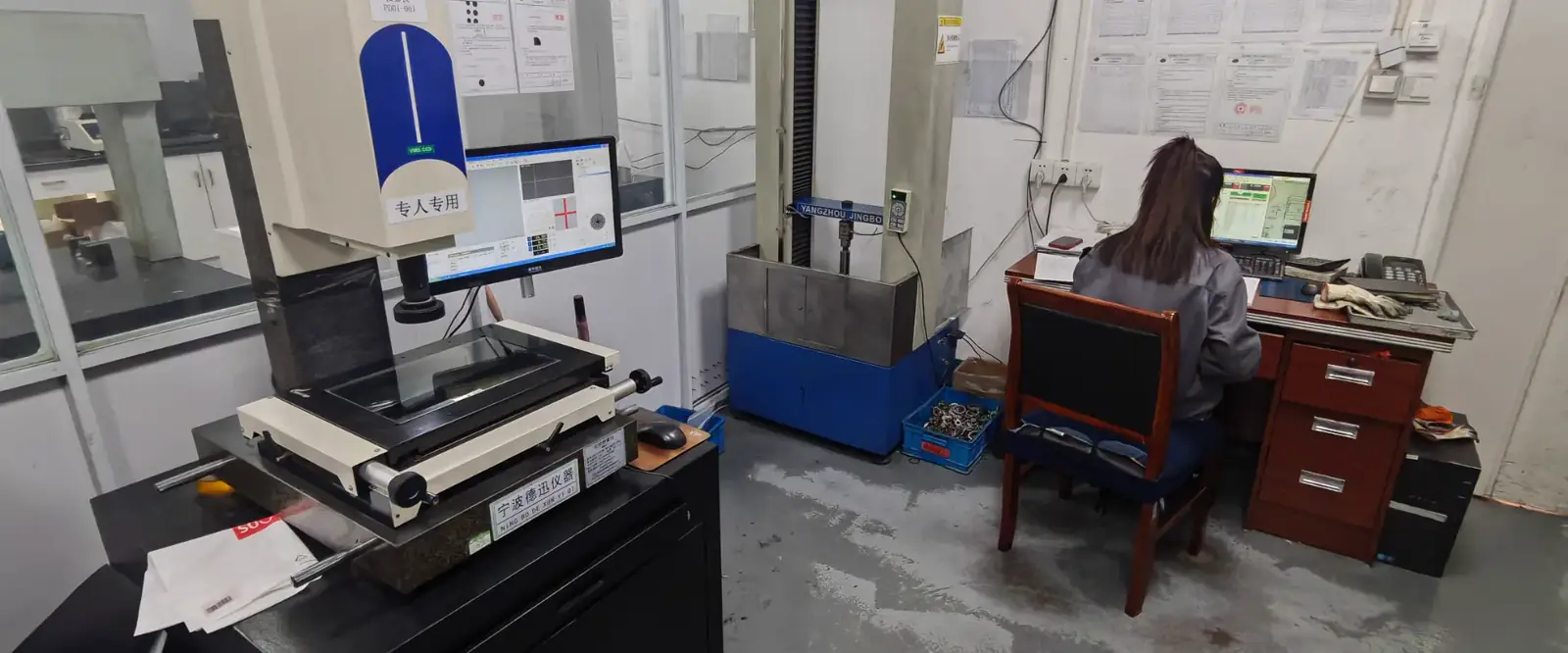
Close-up views of cast components showing surface finish, dimensional features, and application-ready quality.
Leak testing is production verification, not quality inspection. It does not improve part quality — it separates conforming parts (which will seal in service) from non-conforming parts (which will not) before they reach the customer.
Methods Compared
| Method | Medium | Sensitivity | Speed | Cost | Best Application |
|---|---|---|---|---|---|
| Air decay | Dry compressed air | ~1 cm3/min | Fast (15-30 s) | Low | General pneumatic, low-pressure hydraulic |
| Nitrogen decay | Dry nitrogen | ~1 cm3/min | Fast | Low | Hydraulic (cleanliness), coolant circuits |
| Hydrostatic | Water | Visible leak | Moderate | Low | Burst pressure qualification |
| Helium tracer (hood) | Helium | <10^-8 mbar·L/s | Moderate | High | Refrigerant, sealed electronics, precision |
| Hydrogen tracer | H2/N2 mix | ~10^-7 mbar·L/s | Moderate | Medium | Alternative to helium |
Air Decay — Production Standard
Air decay is the standard 100% production test for hydraulic and pneumatic die cast components. The part is pressurized to the test pressure, valved off, and monitored for pressure decay.
Test sequence:
- Part clamped in fixture with test ports sealed
- Pressurize to test pressure (typically 1.25-1.5x rated working pressure)
- Valve off and allow 3-5 s stabilization (thermal equilibration)
- Monitor pressure decay for hold time (15-20 s)
- Compare actual decay to limit — pass or fail
Key sensitivities:
- Temperature variation of +/-1°C changes air pressure by ~0.3% — temperature-stabilized test rooms or temperature compensation essential for tight limits
- Part volume affects sensitivity — smaller part volume = more pressure drop for same leak rate = easier to detect small leaks
Typical acceptance criteria:
| Application | Test Pressure | Hold Time | Decay Limit |
|---|---|---|---|
| Pneumatic valve body (10 bar) | 15 bar | 30 s | <0.5 cm3/min |
| Hydraulic manifold (100 bar) | 150 bar | 45 s | <2 cm3/min |
| Cooling circuit (5 bar) | 8 bar | 30 s | <0.3 cm3/min |
Helium Mass Spectrometer Testing
Helium testing detects leak rates orders of magnitude smaller than air decay — down to 10^-8-10^-10 mbar·L/s. This sensitivity is necessary when:
- The fluid being sealed is expensive (refrigerant)
- Leakage creates regulatory or safety problems (oxygen systems, toxic gas)
- Service life requires leak-free integrity over years (hermetically sealed electronics)
- Standard air decay passes but field failures occur — indicating very small leak rates just below air decay detection
Hood (bomb) method: Part is pressurized internally with helium, placed inside a sealed chamber connected to the spectrometer. Accumulated helium concentration in the hood is measured after a dwell time. Best for production 100% testing of small to medium parts.
Sniffer probe method: Part is pressurized with helium; a probe is passed over external surfaces. Localizes the leak position. Best for qualification, troubleshooting, and root cause investigation.
How to Write a Pressure Test Specification
Vague specifications ("pressure tight," "no leaks") create supplier-customer disagreement. State the test method, medium, pressure, hold time, and acceptance criterion explicitly:
Good examples:
"100% air decay test. Test pressure: 150 bar. Stabilization: 5 s. Hold time: 45 s. Maximum decay: 2 cm3/min."
"100% helium leak test (hood method). Test pressure: 8 bar helium. Dwell time: 60 s. Maximum leak rate: 10^-6 mbar·L/s."
Common specification errors:
- Specifying "1.5x working pressure" without stating the working pressure
- Specifying decay rate without specifying part volume or test pressure
- Specifying "helium leak test" without specifying sensitivity limit or test method
KastMfg Pressure Testing Capability
| Equipment | Range | Sensitivity |
|---|---|---|
| Air decay test stations (4 units) | Up to 200 bar | <0.1 cm3/min |
| Nitrogen high-pressure station | Up to 350 bar | Pressure decay |
| Helium mass spectrometer (hood) | Any pressure | <10^-8 mbar·L/s |
All test records archived: part serial number, test date, test pressure, hold time, actual decay or leak rate, pass/fail. Available to customers on request for 5 years minimum.
Specifying a leak test on a new part? Include it in the RFQ from the start — test pressure, medium, and acceptance limit quoted together with the casting are the difference between a spec the line can hold and one that gets renegotiated after PPAP.
Relationship Between Alloy, VADC, and Test Performance
| Alloy + Process | Typical Air Decay (100 bar, A size part) | Helium Leak Rate |
|---|---|---|
| A380 standard HPDC | 70-75% pass rate | 10^-4-10^-5 mbar·L/s typical |
| A413 standard HPDC | 90-97% pass rate | 10^-4-10^-5 mbar·L/s |
| A413 + VADC | 99-100% pass rate | <10^-6 mbar·L/s |
| A380 + VADC | 98-100% pass rate | <10^-6 mbar·L/s |
FAQ
Q: What is the leak rate spec conversion between air decay and helium testing? A: These methods measure different things, so there is no direct conversion. Air decay reports a pressure drop over time (often quoted in cm³/min); helium reports a tracer gas flow (mbar·L/s). The two numbers only line up if you fix test pressure, gas, and temperature — many drawings quote "cc/min at X bar", which is only comparable to a measurement when all three are stated. A practical rule of thumb: a tight air-decay spec (<0.5 cm³/min) corresponds to helium rates around 10⁻⁴–10⁻⁵ mbar·L/s on the same part, and specs tighter than roughly 10⁻⁵ mbar·L/s generally require tracer gas rather than pressure decay.
Q: Air decay vs helium leak testing — which one for die cast parts? A: Air decay for 100% production screening of hydraulic and pneumatic components — it is fast (15–30 s cycle), cheap, and robust enough for the shop floor. Helium for parts with tighter specs (refrigerant circuits, sealed electronics) or for root-cause work when an air-decay failure needs localizing. Many programs run both: air decay at every machine, helium sampling or containment qualification in the lab.
Q: Can an air decay test detect the porosity that matters? A: It detects connected porosity — the leak paths that run wall-to-wall. It cannot see enclosed shrinkage voids, which are a cosmetic or X-ray concern but not a leak path. That is why vacuum-assisted die casting (VADC) shows such different pass rates: fewer connected paths means a tighter distribution, not just a better average.
Q: Why did my part pass air decay but fail in the field? A: Usually one of three causes: the test pressure was below field conditions (test at 1.25–1.5× rated working pressure, not below it), the hold time was too short to catch a marginal leak at part volume, or the leak only opens under thermal or pressure cycling rather than static pressure. Cycling qualification is a separate test from production screening.
Q: What pressure should a die casting leak test specification call out? A: State four things explicitly: test pressure (typically 1.25–1.5× rated working pressure), medium (dry air, nitrogen, or tracer gas), hold time, and the decay limit in absolute units with the volume basis. A spec that says only "leak test per customer standard" cannot be validated with calibrated reference leaks — and that validation, not the datasheet, defines what the line can actually hold.
Related
- helium leak test vs pressure decay - choosing the method by leak spec
- die casting defects
Pressure test specification support: casting@kastdiecast.com | +86 138 1403 4409
Related Resources
Next steps for die casting leak testing
What Is Die Casting? Process, Types & Materials
Learn what die casting is, how the high-pressure process works step by step, which metals are used, and how hot and cold chamber methods differ.
Process GuideLow Pressure Die Casting (LPDC): Process & Uses
Low pressure die casting (LPDC) explained: upward fill, low porosity, T6-capable aluminum castings, HPDC and gravity comparisons, and when to choose LPDC.
ToolingDie Casting Tooling
Connect process decisions back to gate design, thermal balance, and die maintenance planning.
CapabilityQuality Control
Review inspection workflow, traceability support, and process control standards before launch.
Process GuideDie Casting Process
See how casting, trimming, machining, finishing, and inspection fit together in production.
Next StepRequest a Quote
Send your drawing package and target volume to get an engineering-backed quotation.
Need a Quote for Your Project?
Our engineering team is ready to review your requirements and provide competitive pricing with fast turnaround.
Request a Quote