Die Cast Motor Housings | AC, DC & EV Motors
Precision die cast motor housings for AC, DC, servo, and EV traction motors: end shields, stator frames, and terminal boxes with H6 bearing bores.
Production Capabilities
Component examples for die cast motor housing
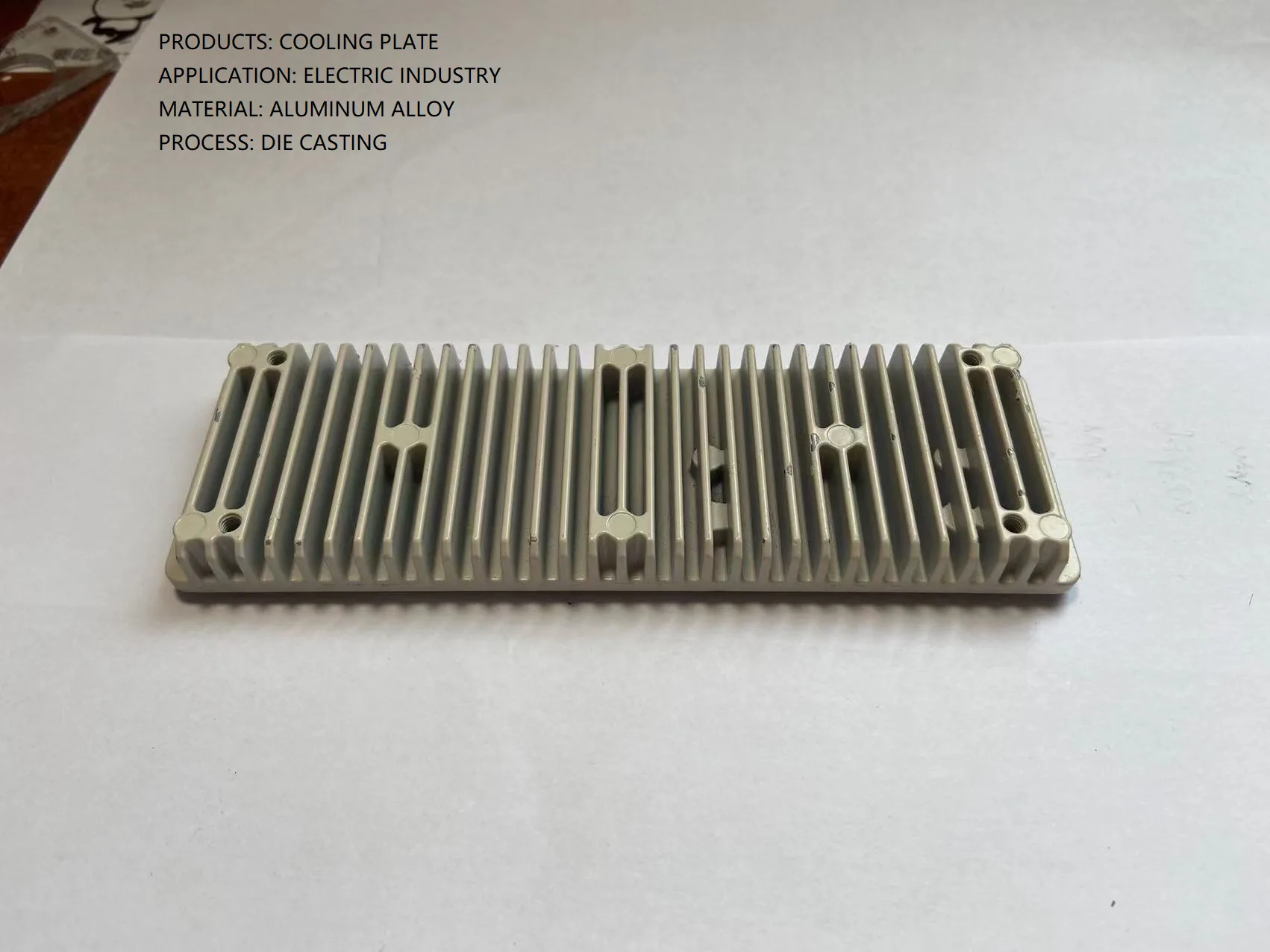
Component Range
Multiple die casting examples from this product family showing the scope of geometries, sizes, and features produced.
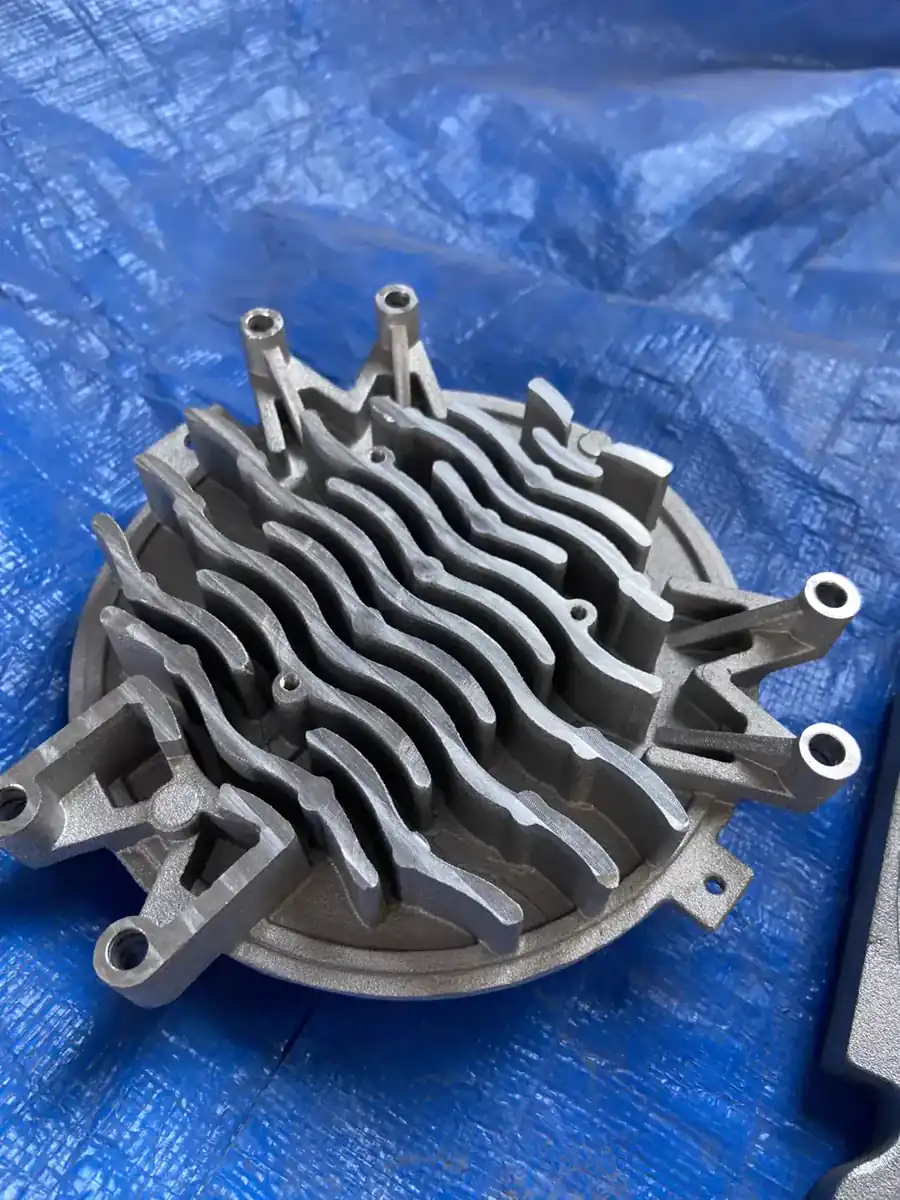
Feature Detail
Close-up views of critical features including threads, sealing faces, ribs, fins, bores, and mounting points.
Electric motor housings — end shields, stator frames, fan covers, and terminal boxes — represent one of the highest-volume aluminum die casting applications globally. Every NEMA and IEC frame induction motor, every servo and stepper motor, and every EV traction motor uses die cast aluminum structural and thermal components.
KastMfg has produced motor housings across motor frame sizes from NEMA 56 to 449T (IEC 63 to 315), in standard AC induction, servo, BLDC, stepper, and EV traction motor configurations. The two decisions that drive most programs are alloy selection and the split between as-cast and machined surfaces.
Parts in This Family
| Part | Motor Type | Key Features |
|---|---|---|
| Front (DE) end shield | All types | Bearing bore H6, rabbet, conduit entry |
| Rear (NDE) end shield | All types | Bearing bore H6, fan cover mount |
| Stator frame (integral) | Small/medium NEMA | Fins, feet, terminal box |
| Fan cover | TEFC motors | Ventilation slots, safety screen |
| Terminal box body | All types | Cable entry boss, mounting feet |
| VFD / servo drive enclosure | Drive electronics | Heatsink fins, DIN rail, IP65 |
| EV traction motor housing | BEV/HEV | Cooling jacket, IP67, H6 bearing bores |
Alloy Selection by Motor Type
Alloy choice for a motor housing is a thermal decision first and a mechanical decision second. The housing must conduct stator and bearing heat to the surrounding air or coolant, hold mounting threads and feet under vibration, and — for EV traction motors — contain a pressurized cooling circuit for the life of the vehicle.
| Motor Type / Requirement | Recommended Alloy | Reason |
|---|---|---|
| General AC induction, servo, BLDC housings | ADC12 or A380 | Best castability and machinability at lowest cost |
| Outdoor, washdown, or high-efficiency motors | A360 | Higher thermal conductivity, better corrosion resistance |
| EV traction with liquid cooling jacket | A380 or ADC12 with vacuum-assisted die casting (VADC) | Pressure-tight jacket walls; A413 is an alternative for maximum leak resistance |
| High-strength mounting areas | Above alloys + T5 aging | Improved yield strength for bracket and foot sections |
Thermal Conductivity: Die Cast Alloys vs Wrought 6061
Buyers frequently benchmark die cast housings against machined 6061. The comparison matters, but the numbers are often quoted incorrectly:
| Material | Thermal Conductivity | Notes |
|---|---|---|
| ADC12 / A380 (as-cast HPDC) | 96 W/m·K | Standard motor housing alloys |
| A360 (as-cast HPDC) | 113 W/m·K | +18% over A380 for thermally loaded housings |
| A413 (as-cast HPDC) | ~121 W/m·K | Higher conductivity, preferred for leak-sensitive jackets |
| 6061-T6 (wrought) | ~167 W/m·K | Machined/extruded parts only — cannot be die cast |
Two conclusions follow. First, no standard HPDC alloy matches 6061: typical die cast conductivity runs 55-65% of the wrought figure, so a die cast housing needs proportionally more fin area or airflow for the same heat rejection. Second, 6061's solidification range causes hot tearing in the die caster — a 6061 property set means extrusion plus machining, not die casting. Where die cast geometry (integral fins, bosses, feet, thin walls) is the reason for choosing casting, the correct response to a thermal shortfall is A360 or A413, more fin area, or a liquid cooling jacket — not a change of process.
As-Cast Surfaces vs Machined Surfaces
The most effective cost decision in a motor housing program is machining only what function requires. Aluminum HPDC produces as-cast surfaces in the Ra 1.6-6.3 μm range — adequate for powder coat, e-oat, and cosmetic areas — but as-cast tolerances of roughly ±0.1-0.3 mm on bores and 0.1-0.5 mm on flatness cannot hold any functional motor interface.
| Feature | As-Cast Acceptable? | Required Finish |
|---|---|---|
| Bearing bores (DE/NDE) | Never | CNC bored, H6/H7 per drawing |
| Sealing and gasket faces | No | Machined flat, 0.02-0.1 mm flatness |
| Oil seal bores | No | Machined, surface finish per seal spec |
| Mounting feet and rabbets | Location as-cast | Machined pads or die-cast with machining allowance |
| Threads (terminal box, cover bolts) | Pilot only | Tapped or thread-milled after casting |
| Finned outer surface | Yes | Shot blast + coating; no machining needed |
Bearing seats deserve specific attention. As-cast bores hold CT5-CT7 casting tolerances — an order of magnitude too loose for a bearing outer ring. Housing-bore fits for rolling bearings follow ISO 286: H7 (+0.030/-0 mm in the 50-80 mm range) is the standard class for a stationary outer ring, with H6 or tighter where IT6 seating is specified, such as small deep-groove bearings with thin rings. These fits are only achievable by boring after casting. All KastMfg bearing bores are machined in a single CNC setup so DE/NDE concentricity is held by the fixture, not by moving the part between operations. For the as-cast versus machined tolerance comparison and the cost drivers behind each machining operation, see CNC machining die castings.
Fin Design and Cooling Geometry
Air-cooled housings move stator heat through the frame wall into radial fins. Die casting integrates these fins directly, but fin geometry is constrained by the process:
- Fin thickness: conventional aluminum die casting supports fin tips down to roughly 1.8-3 mm. Thinner fin tops risk incomplete fill and early die erosion.
- Draft: vertical fin walls need 1-5° draft per side, with 2-3° the practical target. Draft means fins are slightly tapered — wider at the root than the tip — and it limits how closely fins can be spaced at a given height.
- Wall consistency: the frame wall behind the fins should stay near uniform thickness. Housing walls of 2.5-4 mm are typical; abrupt transitions create isolated hot sections that solidify late and concentrate porosity exactly where the thermal path is shortest. Moving from 2.5 mm to 5 mm walls also adds 15-25% to cycle time.
- Fin height and spacing: taller, denser fins raise heat rejection but increase draft interference and ejection force. Ejector pins land on fin tips and rib intersections, so cosmetic-critical surfaces should be mapped before the tool is cut.
For EV traction motors, air fins are increasingly replaced by a cast-in water-glycol cooling jacket around the stator bore. The jacket wall becomes a pressure boundary, which changes both alloy practice and porosity control (see below). Fill simulation is run on every KastMfg housing tool before steel cutting to verify fin fill, hot spots, and porosity zones.
Porosity Control and Leaktightness
HPDC injects metal at high velocity, and some gas entrapment in the casting is inherent. For a fan cover this is cosmetic; for an EV cooling jacket it is a leak failure after machining opens a pore chain. Three layers of control apply:
- Vacuum-assisted die casting (VADC): a vacuum valve pulls air from the die cavity before and during injection, reducing entrapped gas to the point that jacket walls hold pressure and — critically — the casting can survive T6 solution treatment without blistering. VADC is the standard industry practice for leaktight automotive housings and is KastMfg's path for T6-rated EV programs. See heat treatment for die casting for the T5/T6 decision.
- Radiographic screening: internal porosity is graded against ASTM E505 radiographic standards, with the acceptable class defined by zone — pressure boundary walls screened tighter than non-structural areas.
- Sealing and verification: vacuum pressure impregnation (VPI) is available where porosity must be sealed after machining. Every cooling-jacket housing is pressure-tested at 1.5x rated working pressure, 100% of units.
EV Traction Motor Housings
EV traction housings differ from industrial housings in four ways, and each has a sourcing consequence:
- Larger format and tighter datums. A traction housing carries the stator, rotor bearings, gearbox interface, and inverter connectors in one casting. Bearing bore alignment and flange flatness directly affect NVH, so the datum strategy is agreed before tooling, not after first samples.
- Liquid cooling as standard. Hairpin windings and sustained high load push heat flux beyond what air fins reject. The cooling jacket is cast integrally and machined closed, making VADC and 100% leak testing mandatory.
- Corrosion and dielectric requirements. Road spray and galvanic couples with steel fasteners make the coating system part of the RFQ, not an afterthought.
- Giga-casting trend. The industry is consolidating multi-part assemblies into single large castings, popularized by Tesla's 6,000-9,000T giga presses. Full underbody-scale giga castings are a separate process class; the housings described on this page run on conventional 160T-1,600T cells, where the economics for motor-frame-size parts remain strongest. See giga casting explained, our EV motor housing engineering guide, and the EV motor housing case study for the full program-level checklist.
Critical Dimensions and Tolerances
| Feature | Specification |
|---|---|
| Bearing bore diameter | H6 tolerance: +/-0.008-0.015 mm |
| DE/NDE bore concentricity | 0.02-0.05 mm |
| Rabbet perpendicularity to bore | <=0.02 mm/100 mm |
| Parting face flatness (oil seal) | 0.02 mm |
| Cooling jacket pressure test | 100% at 1.5x working pressure |
Dimensional reports (CMM) are issued against the drawing datum structure with each production lot.
Manufacturing Process
- Cold-chamber HPDC — most motor programs run on 160T-800T cells; large EV housings on 1,000T-1,600T machines
- T5 aging available (improved yield strength for high-load mounting bracket areas)
- T6 available for VADC programs — required for crash-safe EV structural applications
- CNC boring of all bearing bores in single setup (concentricity controlled)
- CMM verification of bore diameter, concentricity, and face perpendicularity
- Surface finishing: shot blast, powder coat, or e-coat per specification; plating via qualified finishing partners
Industries
Industrial motors (pumps, fans, compressors, conveyors) -> EV and hybrid traction motors -> Servo and precision motion control -> Appliance motors -> Power tool motors -> Agricultural electric drives
FAQ
What alloy should I specify for my motor housing? ADC12 or A380 for standard industrial housings; A360 where thermal load or outdoor corrosion exposure is significant; A380/ADC12 with VADC for EV housings with cooling jackets. We stock ADC12 and A380 and can quote either with matching certification.
Can you match the thermal conductivity of 6061? No die cast alloy does — ADC12/A380 run ~96 W/m·K against ~167 W/m·K for wrought 6061-T6, and 6061 itself cannot be high-pressure die cast. We close the gap with A360/A413 (+18-26% conductivity) or added fin area, confirmed by thermal review at the DFM stage.
Can bearing bores be held as-cast? No. As-cast bores carry ±0.1-0.3 mm tolerance; bearing outer rings require ISO 286 H7/H6 fits that only post-cast boring achieves. All bearing bores are machined in one CNC setup.
Are EV cooling jackets leak-tested? Yes — every jacketed housing is pressure-tested at 1.5x rated working pressure, 100% of units, with VADC used for jacket-wall porosity control and VPI available as a secondary seal.
What should I send for a housing quote? A 3D model (STEP) plus the drawing, motor frame size or stator/rotor envelope, bearing numbers and fits, cooling circuit working pressure if applicable, target annual volume, and coating spec. DFM review with alloy and machining-surface recommendations is included with every inquiry; pricing is quoted per project.
Related
Motor housing inquiry: casting@kastdiecast.com | +86 138 1403 4409 | No.6, Rungu Road, Nanjing, China
Related Resources
Next steps for die cast motor housing
Die Cast Gearbox Housings | Aluminum Reducer Cases
Precision aluminum die cast gearbox housings for worm, helical, and right-angle reducers, with single-setup machined bearing bores and oil-tight faces.
Product FamilyDie Cast Aluminum Enclosures | IP67 & EMI Shielded
Aluminum and magnesium die cast electronics enclosures with IP65 to IP68 sealing, EMI shielding, precision O-ring grooves, and machined sealing faces.
CapabilityQuality Control
Review inspection workflow, traceability support, and process control standards before launch.
Process GuideDie Casting Process
See how casting, trimming, machining, finishing, and inspection fit together in production.
Next StepRequest a Quote
Send your drawing package and target volume to get an engineering-backed quotation.
Need a Quote for Your Project?
Our engineering team is ready to review your requirements and provide competitive pricing with fast turnaround.
Request a Quote